
Products8 min read
Plastic Cups: Definitive Guide and Best Choices
Guide to choosing the best plastic cups: PP, PET, PS, HDPE, PLA. Learn applications, food-grade safety, and recycling tips for homes and F&B businesses.
Plastic Cups: A Complete Guide to Types and Uses
Plastic cups appear across every F&B segment — from roadside coffee stalls and modern cafés to large-scale catering events. Their practicality, light weight, and economical cost make them a primary choice for both household use and food-service business operations.
This product is not limited to one type. There are many types of plastic cups, each with different characteristics, strengths, and uses. Understanding the differences is essential so you can choose the option that is most suitable, safe, and properly managed.
In general, plastic cups are classified by material. Each material has unique properties — clarity, heat or impact resistance, and recyclability. This knowledge is crucial to ensure you get the right, quality product.
The most common format is the disposable plastic cup. It is usually made from two main materials: PP (Polypropylene) and PET (Polyethylene Terephthalate). PP cups tend to be slightly cloudy or frosty, flexible, and reasonably heat-resistant — suitable for cold to warm drinks. PET cups are typically glass-clear, strong, but less heat-resistant, making them ideal for cold drinks such as juice or bubble tea.
There are also thick plastic cups, generally sturdier and often washable for reuse. Materials can include PS (Polystyrene) for a clear, rigid look, or PC (Polycarbonate), which is extremely strong and shatter-resistant. These cups are often used in offices or formal events as glass replacements.
Beyond material type, plastic cup sizes vary widely — from small cups for sauce or espresso shots, standard 12 oz or 16 oz cups for coffee and tea, to large 22 oz cups for boba or milkshakes. Size selection should match beverage volume and grip comfort.
Choosing the right product is not only about convenience. It also involves food safety, user comfort, cost efficiency, and environmental impact. This guide covers all of those aspects.
The 5 Most Common Types of Plastic Cups and Their Applications
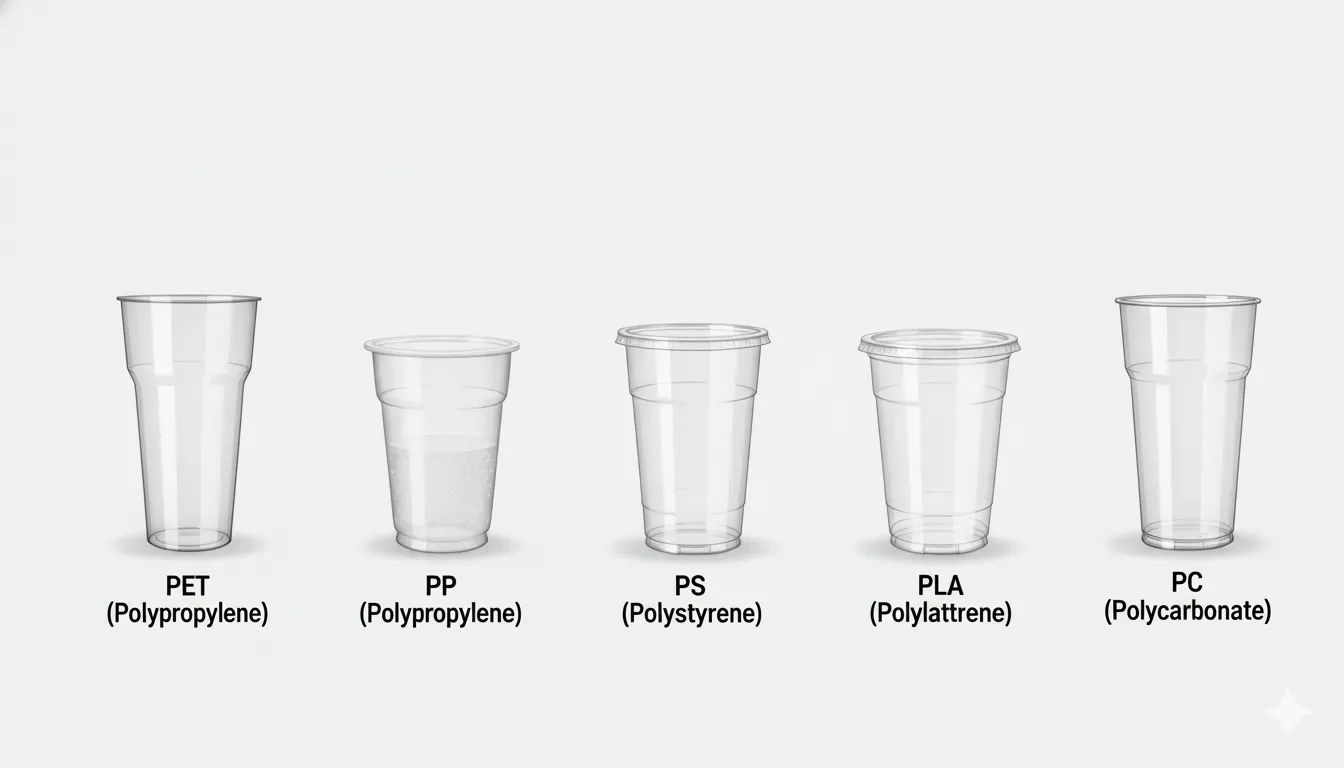
After understanding why plastic cups matter, here is a breakdown of the types of plastic cups most often encountered. Each type has unique characteristics that determine its suitability for specific uses.
Every material has advantages and drawbacks. By understanding the differences, you can choose more wisely for business, events, or personal consumption.
1. PP Plastic Cups (Polypropylene)
- Characteristics: The most common and versatile type. PP is semi-transparent, fairly flexible, and heat-resistant up to 100°C. Safe for both cold and hot drinks.
- Best Applications: Often used in fast-food restaurants, coffee shops, and large events. Ideal for tea, coffee, juice, or boba drinks. Many disposable plastic cups are PP.
2. PET Plastic Cups (Polyethylene Terephthalate)
- Characteristics: Clear and glass-like. This material is rigid, light, and excellent for displaying beverage color. It is less heat-resistant than PP and begins softening above 70°C.
- Best Applications: Perfect for cafés serving iced coffee, smoothies, or fresh drinks. Ideal for trendy packaged drink plastic cup sizes.
3. PS Plastic Cups (Polystyrene)
- Characteristics: PS is very clear and rigid, similar to PET. It is more brittle and cracks easily. Not recommended for hot drinks.
- Best Applications: Because it is economical, it is often used for parties, picnics, or beverage samples. Suitable for single-use cold drinks.
4. HDPE Plastic Cups (High-Density Polyethylene)
- Characteristics: This is a strong, opaque thick plastic cup, usually milky white or solid-colored. It is highly resistant to chemicals and moisture.
- Best Applications: Rarely used as a direct drinking cup, but often used for dairy containers, frozen foods, or detergent packaging. Its strength makes it durable.
5. PLA Plastic Cups (Polylactic Acid)
- Characteristics: A more environmentally friendly innovation. PLA is made from renewable sources such as corn starch and can biodegrade under certain conditions — requiring 55–60°C in industrial composting facilities. It resembles PET, clear and rigid, but is not resistant to high heat.
- Best Applications: A choice for environmentally conscious F&B operators. Suitable for cold drinks and desserts in eco-friendly cafés. Although the plastic cup price is higher, it is a sustainability investment.
Understanding these types of plastic cups is not just technical — it supports better decisions for the environment, food safety, and cost efficiency.
How to Choose Plastic Cups That Are Safe and Environmentally Responsible for Families
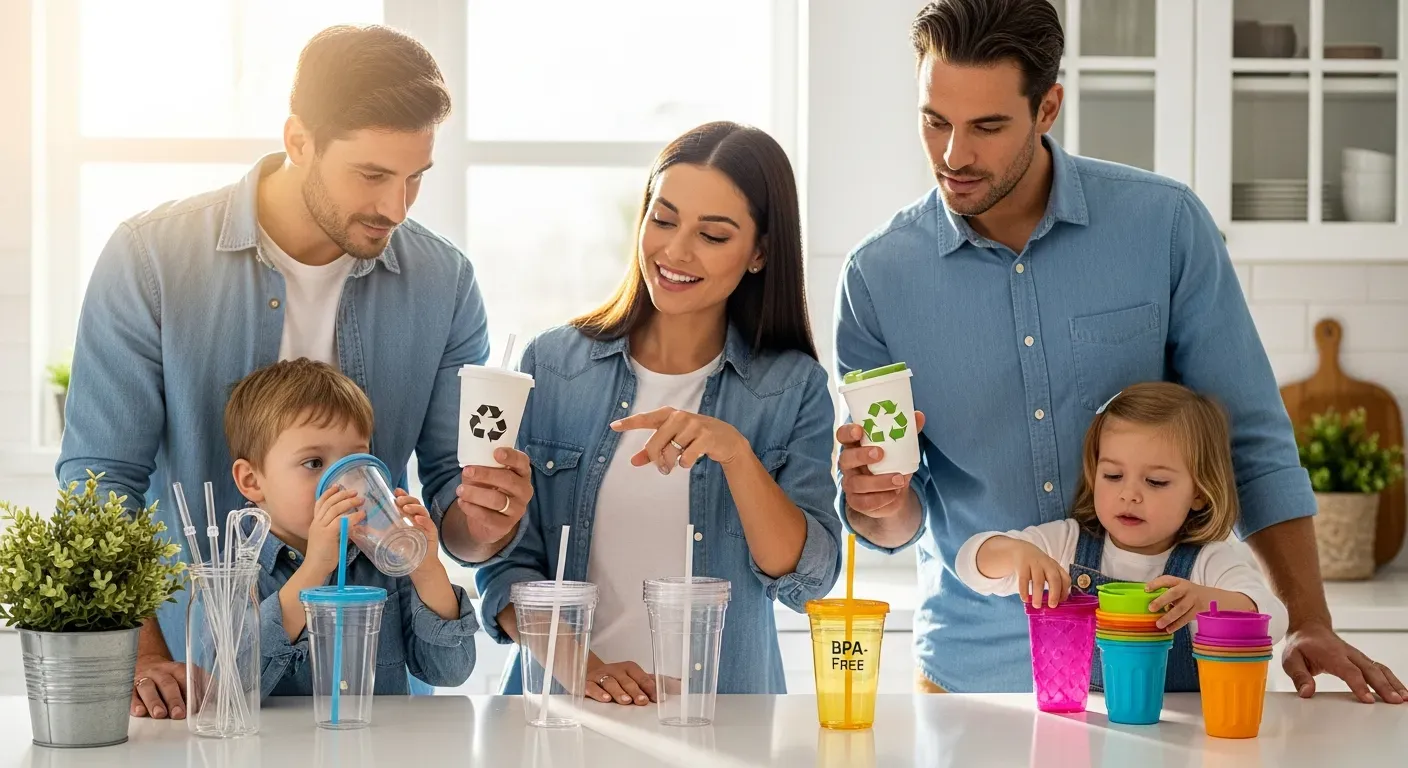
Choosing plastic cups for family needs requires special attention — safety and sustainability parameters must be considered together.
Not all plastic cups are created equal. Pay attention to the material so you do not choose the wrong option, especially for children.
Prioritize Family Health and Safety
- Look for a "Food Grade" or food-safe label: This is the main sign. Plastic cups with this label have passed safety standards and will not release harmful substances into your drinks or food. They are usually made from materials such as PP or PET, as covered above.
- Make sure they are BPA-Free: BPA (Bisphenol A) is a chemical used in certain plastics and is suspected to affect health, especially in young children. Choose plastic cups that clearly display a BPA-Free label.
- Check the recycling code: On the bottom of the cup, there is a triangle symbol with a number inside. Numbers 1 (PET), 2 (HDPE), 4 (LDPE), and 5 (PP) are generally considered safe for food and beverage use. Avoid number 3 (PVC) and number 6 (PS) for direct contact with food or hot drinks.
Choose Environmentally Responsible Plastic Cups
Besides safety, consider environmental impact — a small step with a large effect.
- Choose recyclable products: Plastic cups with recycling codes 1 (PET) and 5 (PP) are the most common and easiest to recycle in many places. This reduces piles of disposable plastic cups.
- Consider PLA plastic cups: PLA is made from corn starch and can biodegrade in industrial composting facilities. Although plastic cup prices for PLA are higher, it is an investment in sustainability. Suitable for cold drinks.
- Choose reusable plastic cups: For daily home use, invest in high-quality thick plastic cups designed to be washed and reused. This is far better than continuously buying disposable plastic cups. Choose the right size for your needs to avoid waste.
With a little attention to labels and material types, you can find plastic cups that are safe for the family while helping protect the environment.
What Is the Environmental Impact of Plastic Cups and How Can It Be Reduced?
Plastic cups are practical and affordable — but behind that convenience is an environmental cost. Every day, millions of disposable plastic cups are thrown away and accumulate, creating serious problems. Indonesia faces a plastic waste emergency that requires sustainable management.
The most visible impact is accumulated waste. Most plastic cups are made from materials that are very difficult to break down naturally, taking hundreds of years to disappear from the earth. A cup used for five minutes can pollute the environment for generations.
Plastic waste also often ends up in the ocean, polluting ecosystems and threatening marine life. It breaks down into microplastics that can enter the food chain and even the human body.
Here are seven effective steps to help reduce plastic cup waste:
- Bring Your Own Tumbler: This is the most powerful step. Whenever you buy coffee or drinks, bring a personal tumbler or bottle. Many cafés even offer discounts for customers bringing their own containers.
- Choose Reusable Plastic Cups: If you need plastic cups, invest in high-quality thick plastic cups that can be washed and reused. This is much better than repeatedly buying disposable plastic cups.
- Refuse Unnecessary Plastic Cups: When buying packaged drinks at supermarkets, you are often offered plastic cups and straws. If you will drink directly or already have a tumbler, refuse firmly.
- Sort Waste Correctly: Make sure you dispose of plastic cup waste in the right recycling stream. Not every plastic cup type can be recycled in the same way, so sorting matters.
- Choose Eco-Friendly Alternatives: Consider switching to cups made from glass, stainless steel, or bamboo for home or office use. These options are more durable and environmentally friendly than single-use plastic.
- Educate Yourself and Others: Share information about the dangers of plastic waste with family and colleagues. The more people understand, the greater the impact.
- Support Sustainable Innovation: Choose products or brands committed to environmentally friendly solutions, such as plastic cups made from recycled material or compostable materials like PLA.
With these steps, we can create meaningful environmental change. Every cup we do not throw away is a small win for the planet.
Smart Tips for Buying Quality Plastic Cups: Avoid Waste and Costly Mistakes
Buying the right plastic cups requires careful consideration. Choosing poorly can be wasteful and ineffective. Use this guide to get a product that is suitable, high quality, and aligned with your needs.
Understand Your Need: Disposable or Reusable?
Before buying, define the main purpose. Is it for a single event or repeated use? This is the key to choosing the right plastic cup type.
- Disposable cups: For parties, catering, or beverage businesses, this option is practical. When buying in quantity, compare plastic cup prices per unit to save cost.
- Reusable cups: For daily use, invest in thick plastic cups. Look for sturdy, washable, long-lasting products. They are more economical over the long term.
Prioritize Quality and Safety
Do not be tempted by the cheapest plastic cup price. Material quality matters. Thin products break easily, making you waste money by buying replacements too often.
Always check food-grade and BPA-free labels. These indicate that the container is safe for your food and drinks. Also pay attention to recycling codes — important for the environment.
Choose the Right Size
Many plastic cup sizes are available. From small to large, match the size to the drink or serving portion. The right size avoids waste and maximizes function.
For coffee, choose a size that is not too large. For high-volume cold drinks, larger sizes are ideal.
Consider the Environmental Aspect
Where possible, look for products made from recycled or easily recyclable material. This small step has a large impact. Even for single-use needs, eco-friendlier options are now available.
With this guide, you can buy quality products that are effective and responsible. Smart choices also help reduce waste and support environmental sustainability. For bulk orders of food-grade PP cups, contact the Wingoh procurement team.