
qc6 min read
Plastic Cup Quality Testing: The Secret Behind Cup Safety
How are plastic cups guaranteed safe? Learn the strict plastic cup quality testing standards from factory production to final use.
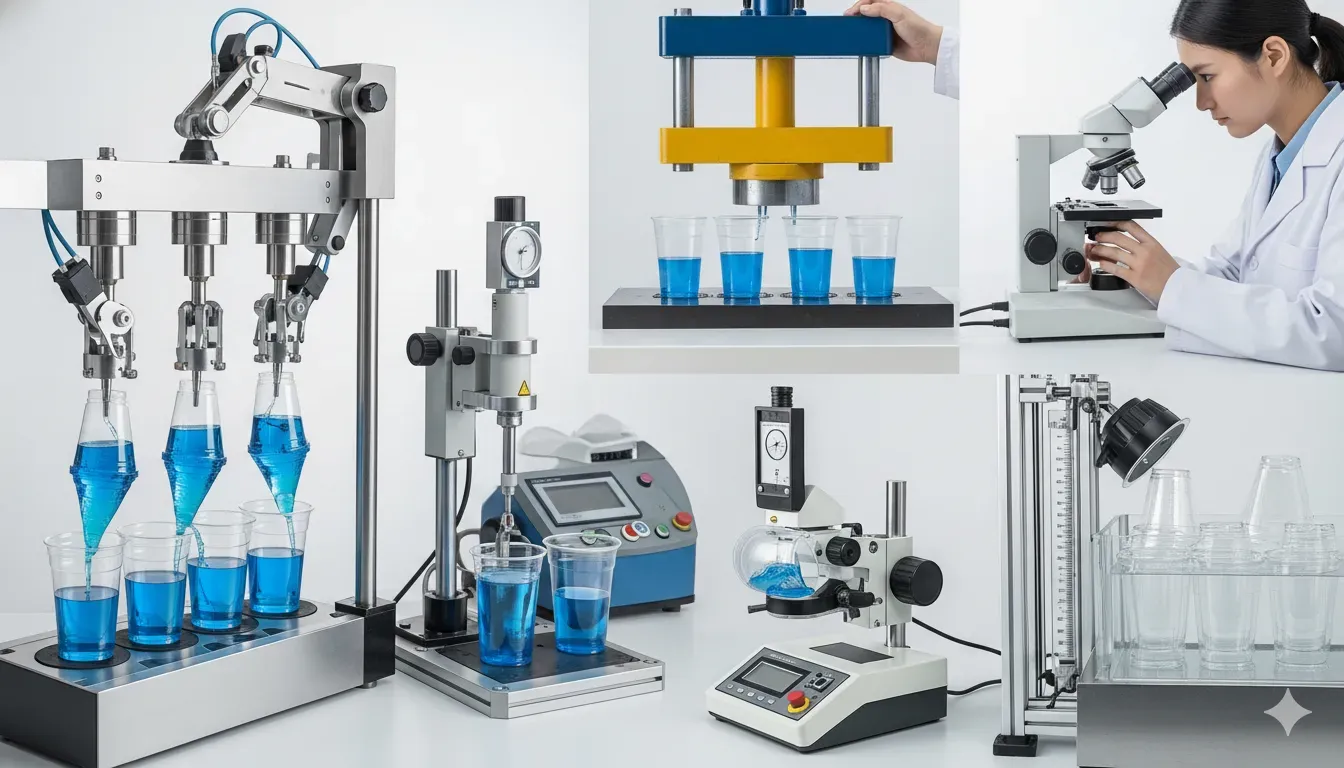
Plastic Cup Quality Standards: What Testing Processes Happen Before Cups Reach Consumers?
Why Plastic Cup Quality Testing Matters for Food Safety
For procurement and quality assurance teams in the F&B sector, choosing a plastic cup manufacturer is not only about unit price. It is about a quality control system that can be verified. Low-quality plastic cups create real risk: chemical migration from plastic into drinks or food, affecting end-consumer safety and the buyer’s brand reputation.
Behind every food-grade PP cup that passes into the distribution chain is a structured series of plastic cup quality tests. The process does not only ensure that cups do not leak. It verifies material conformity with food safety standards that apply nationally and internationally.
Manufacturers with proper standards run layered testing from incoming resin inspection, in-process control during injection molding, and final sampling before products leave the warehouse. This system separates manufacturing partners that are reliable for long-term contracts from producers that only compete on spot pricing.
Every cup must pass a series of tests, from confirming that the raw material is a safe food-grade plastic type to cup heat-resistance testing so the cup does not melt when filled with hot drinks.
7 Crucial Steps in Comprehensive Plastic Cup Quality Testing
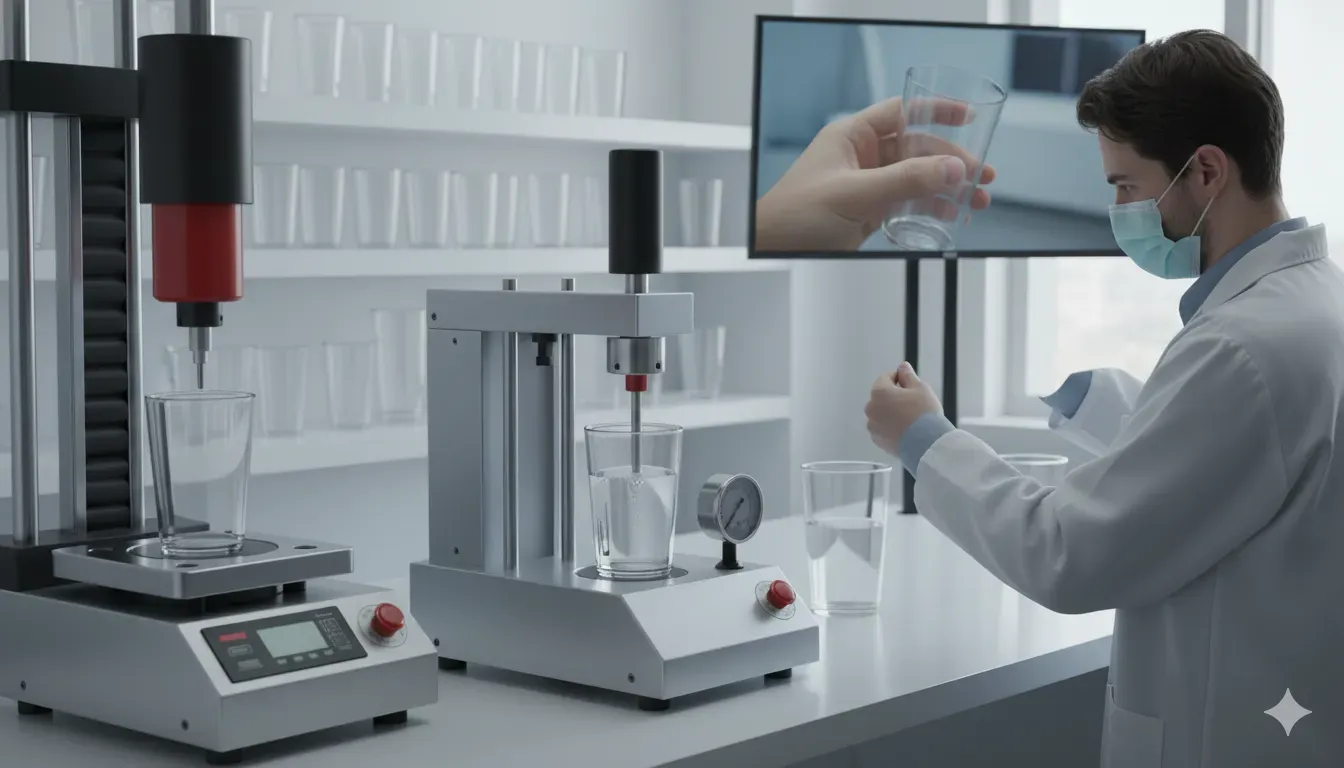
These are seven crucial steps in plastic cup quality testing to ensure safe, high-quality products:
- Raw Material Test: Confirms that the material used is a safe food-grade plastic type and free from harmful substances.
- Dimension and Shape Test: Checks size, thickness, and shape conformity against specification.
- Physical Strength Test: Tests resistance to impact or pressure so the cup does not break easily.
- Temperature Resistance Test: Tests cup resistance when filled with hot liquid or extreme cold; it must not melt or deform.
- Chemical Migration Test: Ensures there is no unsafe chemical migration from plastic into drinks or food.
- Leak Test: Confirms the cup is properly sealed and does not leak in use.
- Visual Test: Detailed inspection to ensure no defects, scratches, or contamination.
All stages are crucial to guarantee food safety in plastic packaging across the distribution chain.
SNI, ISO, and BPOM Standards for Plastic Cups
After understanding the testing stages, the regulatory layer is just as important: Indonesian National Standard (SNI), international ISO standards, and BPOM regulation.
SNI for Food-Grade Plastic Cups
SNI 7321 regulates requirements for plastic cups in food contact, including additive limits and food-grade resin requirements. SNI 4-7274 covers broader plastic packaging requirements for food. SNI-certified cups have passed conformity testing — this is not merely an administrative label, but proof of accredited laboratory testing.
ISO 2859 — AQL Sampling for Shipments
Manufacturers that export or supply corporate buyers generally use sampling according to ISO 2859 Acceptance Quality Limit (AQL). AQL 1.5 is used for export markets (maximum defect tolerance of 1.5% per batch), while AQL 2.5 is used for standard domestic markets. Buyers that specify AQL in their POs can refer directly to these numbers during vendor audits.
ISO 22000 and FSSC 22000 — Food Safety Systems
ISO 22000 is a food safety management system standard covering the entire production chain. FSSC 22000 is a stricter certification extension, adding infrastructure and production-environment requirements. Wingoh holds FSSC 22000 certification, which forms the basis of its layered QC system across food-grade PP cup production lines.
BPOM — Chemical Migration Supervision
BPOM supervises food safety in plastic packaging with a focus on chemical migration. Every food packaging product circulating in Indonesia must meet BPOM migration limits, including tests under temperature and contact-duration conditions that simulate real use.
For buyers, choosing a manufacturer with an active BPOM registration number and SNI certification is a basic step in vendor qualification.
International Test Standards: ASTM and EU Regulation
Buyers supplying international F&B networks or exporting products to Europe and Australia should pay attention to two additional standards that often become contract requirements.
ASTM D6537 — Drop Test
ASTM D6537 governs drop-resistance testing for consumer packaging. The protocol includes dropping a cup from 1 meter while filled to 75%, repeated 10 times per sample. Cups that crack, leak, or show permanent deformation fail. This test is relevant for takeaway beverage packaging exposed to courier logistics.
EU Regulation 10/2011 — Overall Migration Limit (OML)
For exports to the European Union, food-contact plastic cups must meet an Overall Migration Limit of 10 mg/dm² of contact surface. Testing is conducted under two conditions: 40°C for 10 days (ambient storage conditions) and 70°C for 2 hours (hot-fill beverage conditions). Standard food-grade PP is generally far below this limit, but official laboratory documentation is still required for EU customs clearance.
Top-Load Strength
Vertical compression testing (top-load) on food-grade PP cups generally produces values of 500–800 Newton before permanent deformation. This matters for stacking inside shipping cartons; weak cups can collapse at the lower levels during transit.
How to Prevent Chemical Migration from Low-Quality Plastic Cups
The potential for chemical migration from plastic into drinks or food increases significantly under certain conditions: high temperature, acid exposure, or repeated use of single-use cups. This is one major reason migration testing is mandatory under food regulations.
Procurement-side prevention steps include:
- Require migration test documentation from the manufacturer — not just an unsupported “food-grade” claim.
- Choose cups made from registered food-grade plastic types. PP (Polypropylene) and PET (Polyethylene Terephthalate) are two main options with the longest food-safety track records.
- Make sure cups match the intended temperature specification. Food-grade PP cups tolerate 100°C continuous use, while PS is only suitable for room temperature.
- Verify lot numbers and batch documentation when receiving shipments to support traceability if an issue appears.
Responsible manufacturers conduct periodic migration testing per material formulation and document the results as part of an auditable QC system.
Choosing the Best Raw Material: Food-Grade Plastic Types (PP, PET, PS) and Their Advantages
Raw material selection determines the baseline quality of the final plastic cup. Standardized manufacturers select food-grade plastic types with documented safety records:
- PP (Polypropylene): The dominant choice for injection-molded cups. Food-grade PP code #5 has thermal stability up to 100–120°C, works for hot and cold drinks, and has a low chemical migration profile. This is the material Wingoh uses across its food-grade PP cup lines.
- PET (Polyethylene Terephthalate): Strong in clarity and structural rigidity. Suitable for cold-drink cups that rely on visual transparency. PET is not recommended for high-temperature applications.
- PS (Polystyrene): Common for rigid, clear disposable cups at room temperature. It is not heat-resistant — avoid use with drinks above 60°C.
Technical PP resin specifications for thinwall cups generally include Melt Flow Index (MFI) of 25–35 and density of 0.905 g/cm³ to ensure optimal flow in multi-cavity molds.
Investment in QC Systems: Long-Term Benefits for Buyers and Manufacturers
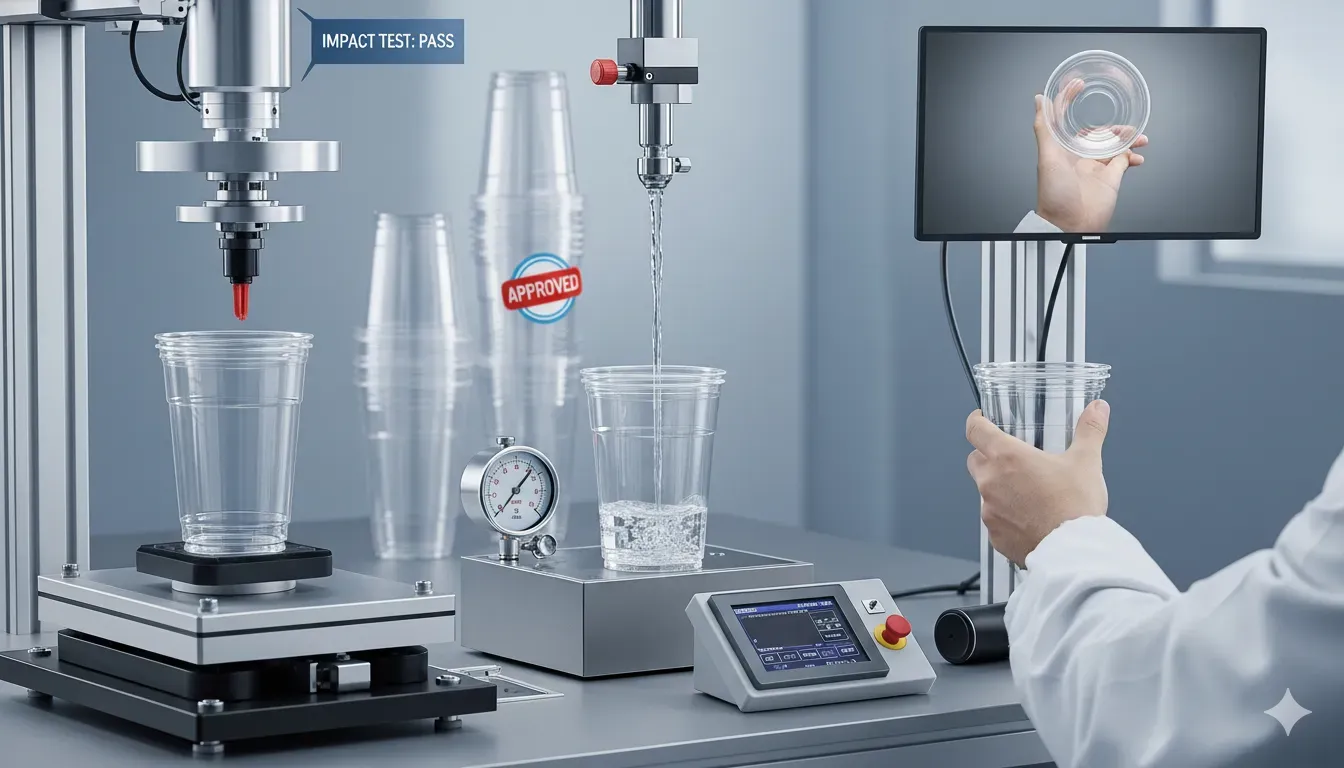
For manufacturers, a consistent plastic cup quality testing system is not only regulatory compliance. It is an investment in long-term buyer trust. Factories that run layered QC protocols can provide written assurance about the product specifications buyers receive.
For corporate buyers and distribution networks, choosing a manufacturer with an auditable QC system delivers concrete benefits:
- Reduces product-recall risk from contamination findings or chemical migration.
- Simplifies vendor due diligence for export contracts requiring food-safety documentation.
- Maintains consistent cup dimensions and weight per batch, directly affecting sealing and packaging machine performance on the buyer’s production line.
- Provides batch traceability for recall management if needed.
Manufacturers such as Wingoh, operating under FSSC 22000 certification, run periodic batch sampling, document all QC parameters, and provide a certificate of conformance for each shipment.
To learn more about how plastic cups are made and the injection molding process that creates dimensional consistency, see our production article. Or visit Wingoh’s injection plastic cup products for technical specifications and customization options.