
Materials5 min read
Plastic Cup Material Differences: Choose the Right One
Choosing plastic cups for hot coffee or cold juice? Learn the differences between PP, PET, PS, PLA, and PC — and find the safest, most comfortable option.
Understanding the Functions of Different Plastic Cup Materials: From Hot Coffee to Cold Juice, the Best Choice Starts Here
Essential Guide: Why Understanding Plastic Cup Materials Matters
Plastic cup material directly determines beverage safety, temperature resistance, and food-contact regulatory fit. PP cups (#5) withstand 100-120°C; PET cups (#1) only withstand around 70°C. Choosing the wrong material creates deformation risk and possible chemical migration into the beverage.
Understanding plastic cup material differences is crucial for beverage business operators — not just for knowledge, but also for the safety of products served to consumers.
Each plastic cup material has its own characteristics. Some are clear, flexible, or rigid, each with specific advantages and disadvantages. By knowing these details, you can become a smarter buyer and choose the right plastic cup: safe, practical, and supportive of operational efficiency.
For a complete guide to resin codes #1-#7, read types of plastic for business owners.
5 Most Popular Plastic Cup Material Differences: PP, PET, PS, PLA, and PC
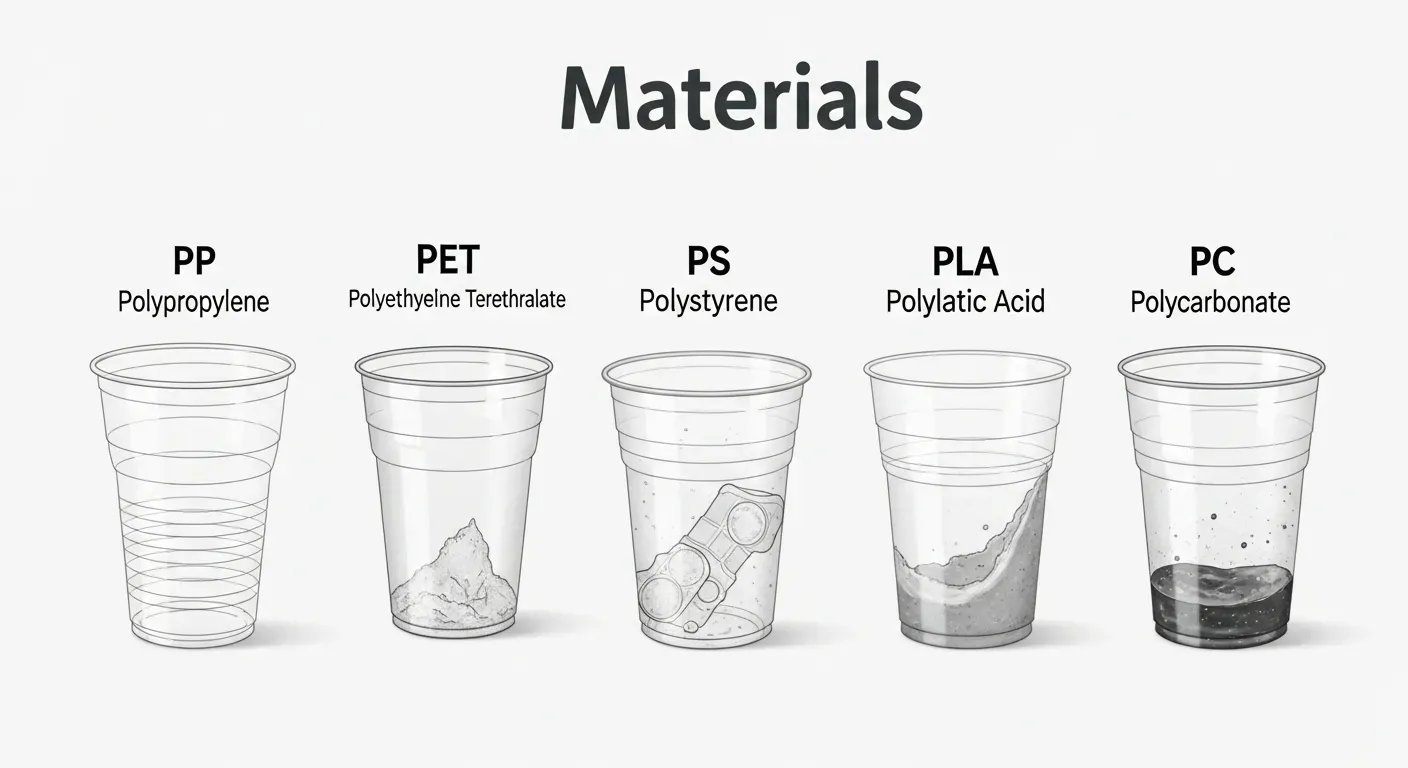
Five plastic cup materials are most common in the F&B industry, each with different characteristics and uses:
- PP (Polypropylene): High heat resistance up to 100-120°C, semi-transparent. Resin code #5, density 0.905 g/cm³. Suitable for hot coffee/tea and often called a PP cup. Meets FDA 21 CFR 177.1520 standards for food contact.
- PET (Polyethylene Terephthalate): Crystal clear, lightweight, temperature limit 70°C. Resin code #1, density 1.38 g/cm³. Ideal for cold drinks. Avoid heat exposure.
- PS (Polystyrene): Lightweight, rigid, and easy to crack. Resin code #6. Common for economical non-hot disposable cups.
- PLA (Polylactic Acid): Plant-based plastic that decomposes in industrial composting facilities. Visually similar to PET, used for cold drinks.
- PC (Polycarbonate): Very strong and clear, but rarely used for disposable cups because of BPA concerns and high cost.
By understanding plastic characteristics and the strengths and weaknesses of each, you can choose the right cup for every business application.
What Are the Advantages and Disadvantages of Each Plastic Cup Type?
Here is a detailed comparison of plastic cup material differences by key characteristics:
1. PP (Polypropylene)
- Advantages: High temperature resistance — PP cups withstand 100-120°C, making them suitable for hot drinks. Flexible, competitively priced, and safe as microwave-safe containers. This is one of the most important plastic cup material differences.
- Disadvantages: Slightly cloudy, not as clear as PET.
2. PET (Polyethylene Terephthalate)
- Advantages: Very clear, lightweight, and suitable for cold drinks. Premium appearance and easy to recycle. Excellent oxygen barrier.
- Disadvantages: Temperature limit is only 70°C. Avoid hot drinks above this temperature because the structure can soften.
3. PS (Polystyrene)
- Advantages: Lightweight and the most economical. Common for disposable cups for snacks or non-hot drinks.
- Disadvantages: Easily breaks or cracks, is not heat resistant, and is difficult to recycle.
4. PLA (Polylactic Acid)
- Advantages: A plant-based plastic cup material. Clear like PET and can decompose in industrial composting facilities. An environmentally friendly choice for cold drinks.
- Disadvantages: Higher price, requires special composting conditions, and is not heat resistant.
5. PC (Polycarbonate)
- Advantages: Very strong, impact resistant, and clear. Often used for reusable drinking bottles.
- Disadvantages: Expensive and associated with BPA (Bisphenol A) concerns, so it is rarely used for disposable food-product cups.
How Do You Choose the Right Plastic Cup for Safety, Environment, and Application?
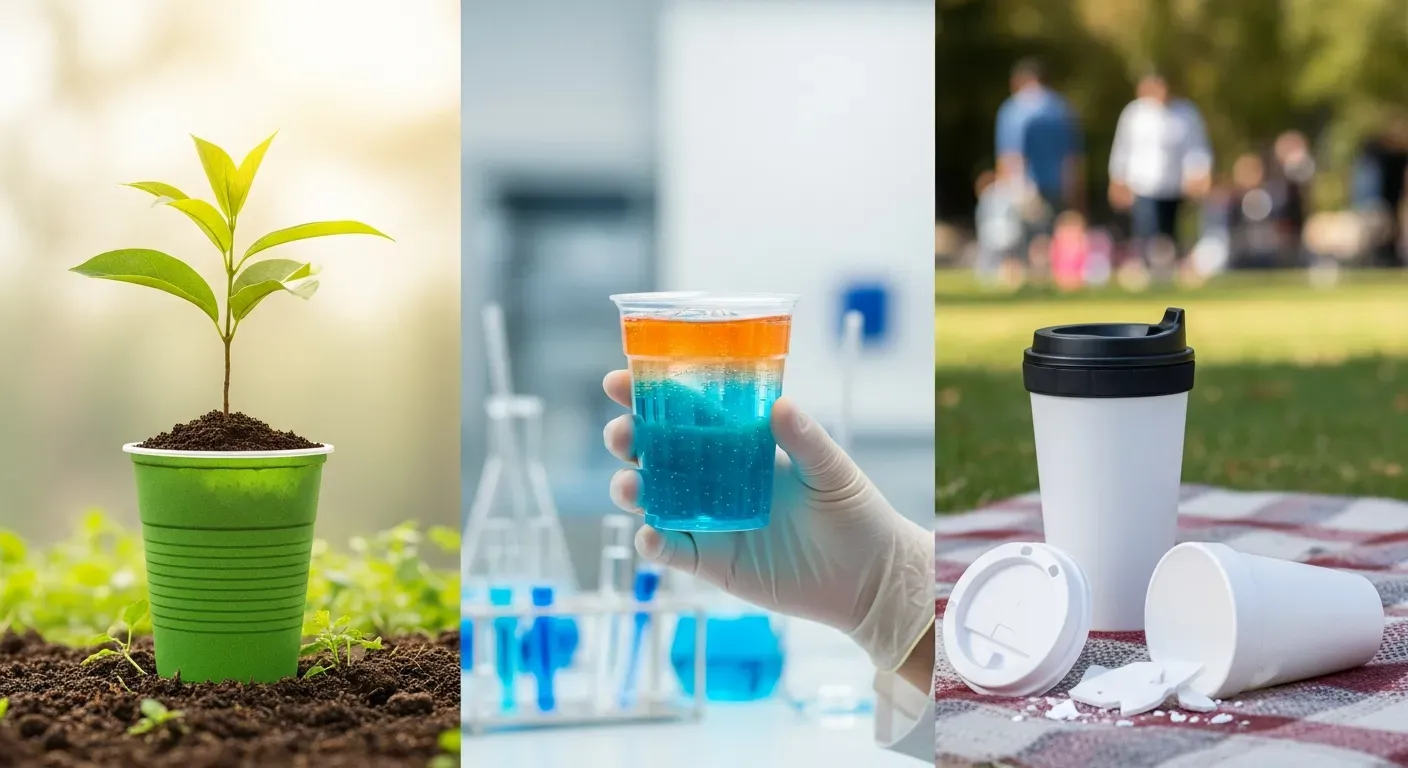
Choosing a plastic cup involves three dimensions: food safety, environmental impact, and operational fit.
Safety Considerations
Beverage temperature is critical. Using a plastic cup type that is not heat resistant — for example PET for hot coffee above 80°C — risks deformation and chemical release into the beverage. The overall migration limit under EFSA Regulation 10/2011 is 10 mg/dm². Make sure the plastic cup material has verifiable food-grade certification, including a CoA per batch.
Wingoh produces injection plastic cups from food-grade PP with FSSC 22000 certification — a standard required by major F&B chains and exports to Australia.
Environmental Considerations
The environmental impact of plastic cups cannot be ignored. PP (code #5) and PET (code #1) are two of the easiest materials to enter recycling streams in Indonesia. PLA is environmentally friendly but requires specific industrial composting conditions to decompose. For more information on plastic waste management, see initiatives from Indonesia's Ministry of Environment and Forestry.
Practical Application Considerations
Each plastic characteristic has an ideal use. For hot drinks, PP cups are the best choice thanks to their temperature resistance. Clear cold drinks are well suited to PET or PLA. Choosing correctly improves consumer experience and cost efficiency.
For a specific PP guide, read PP plastic for cups.
Quick Ways to Tell Plastic Cup Types Apart
There are three practical ways to identify the plastic cup type you are holding:
- Clarity: PET cups are perfectly clear and suitable for cold drinks. PP cups tend to be cloudy or milky and withstand high temperatures. PS is clear but brittle.
- Touch and Flexibility: PET is rigid but elastic. PP cups are more flexible and resilient. PS cracks or breaks very easily. This plastic cup material difference can be felt immediately.
- Recycling Code (RIC): The most accurate method. Check the cup base: number 1 = PET, 5 = PP, 6 = PS. This code definitively identifies the plastic cup material.
With these tips, you can identify different drinking-container types more quickly for procurement or quality control.
The Future of Plastic Cups: Latest Innovation and Eco-Friendly Alternatives
Manufacturers and researchers are developing new materials that are thinner but stronger, or easier to recycle repeatedly. The goal is to reduce environmental impact and increase packaging circularity.
Several alternatives are developing:
- Bioplastics: Made from plant materials such as corn or sugarcane. These materials have properties similar to conventional plastic but can decompose faster under the right conditions.
- Paper Cups with Eco-Friendly Linings: Inner linings made from PLA or materials that decompose more easily than conventional PE.
- Other Natural Materials: Cups from bagasse, bamboo, or cassava starch — each with its own advantages and challenges.
Current options such as PP cups or PET will continue to evolve. Understanding the different material types helps you choose the best option, both for operational needs and sustainability targets.
For a more detailed procurement guide, visit Wingoh's plastic cup products page or read about plastic cup materials as a comparative reference.