
Design6 min read
Innovative Plastic Cup Design: 7 Brilliant Ideas That Change the Drinking Experience
Seven innovative plastic cup designs that can change how customers enjoy beverages — from ergonomic features to more sustainable materials.
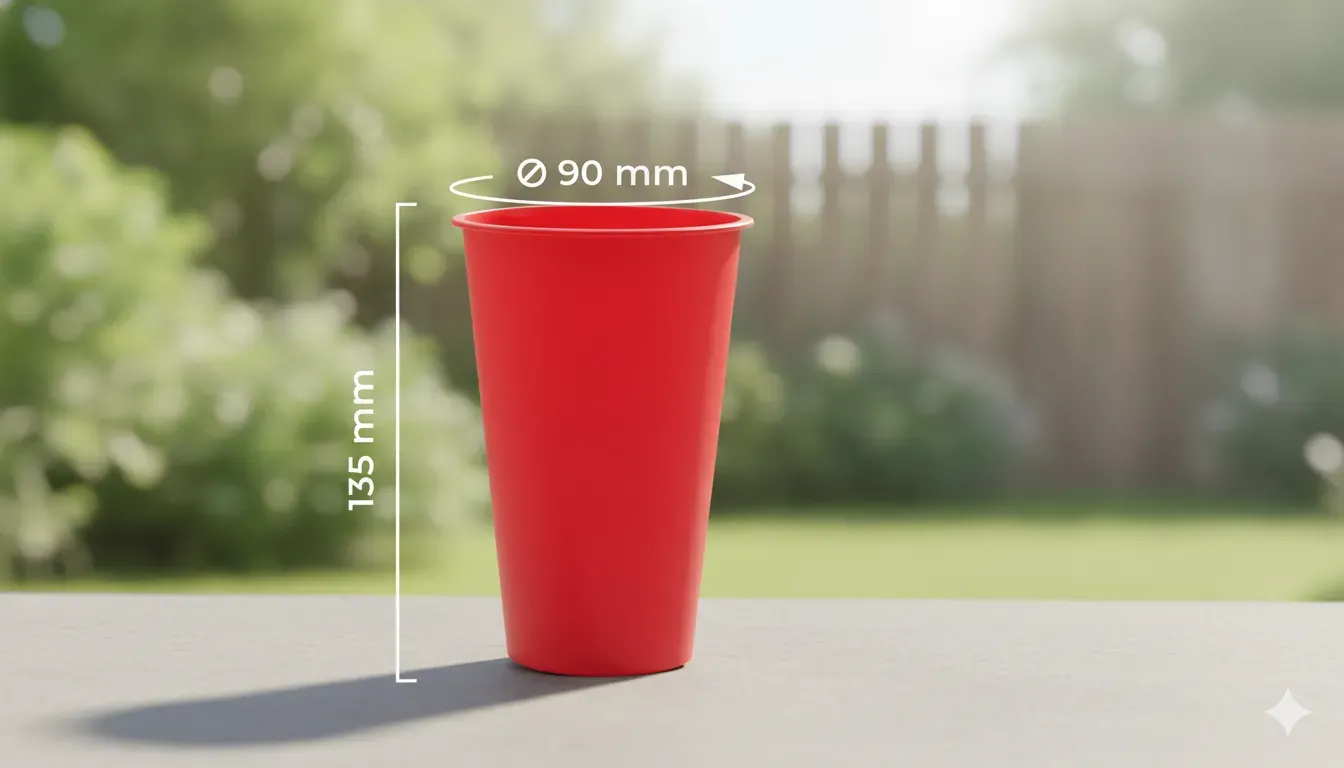
7 Innovative Plastic Cup Designs That Change the Drinking Experience
Why Innovative Plastic Cup Design Is Key to Beverage Business Success
A plastic cup is not just a container — for F&B operators, innovative plastic cup design is both a branding instrument and a functional tool. The right design directly affects customer perception, staff handling efficiency, and logistics cost per unit.
Beverage packaging with a well-targeted design creates a consistent first impression at every distribution point — from the store counter to the delivery customer’s table.
In a competitive beverage market, visual differentiation becomes a concrete advantage. Strong cup branding supports brand recall without extra marketing cost: every cup in circulation is a moving promotional medium.
Beyond visual appearance, design also determines operational functionality. Cups with a body diameter of 70–95 mm and the right taper angle allow efficient stacking and can reduce storage space by up to 30%. This is directly relevant for procurement teams managing limited warehouse capacity.
Good design also considers the plastic cup material being used — structural strength, food safety, and long-term grip comfort.
Following packaging design trends keeps products relevant in the market. Minimalist designs or unique coffee cups with artistic touches become selling points that can be communicated directly to buyers.
7 Top Trends in Modern Plastic Cup Design You Should Know
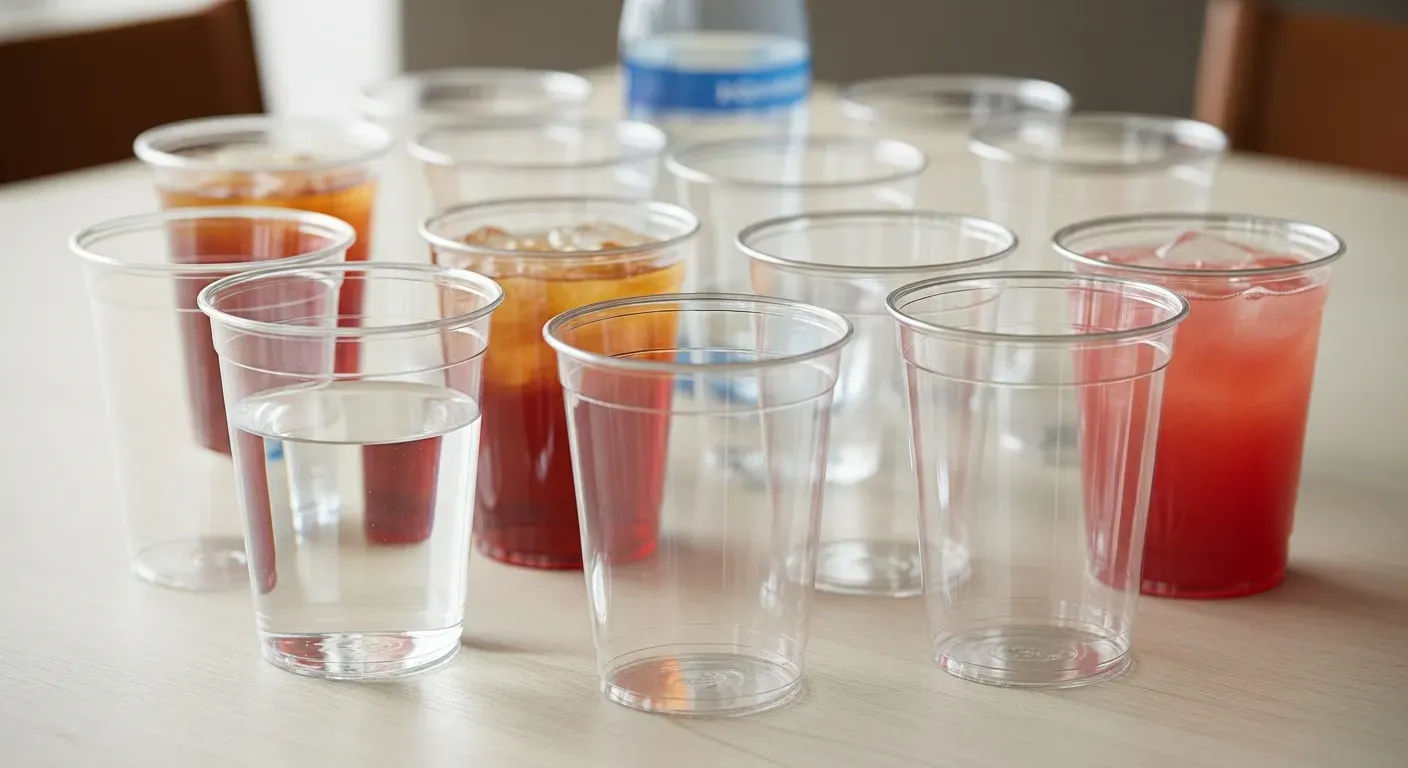
Here are seven top trends in beverage packaging that are relevant for procurement and branding decisions:
- Minimalist Design & Clean Look: Focuses on simplicity, clean lines, and elegance. It makes cup branding look modern and premium.
- Pastel Colors & Earthy Tones: Soft, natural tones that create a calming and aesthetic impression, often seen in unique coffee cups.
- Maximum Transparency: Transparent cups show the beverage itself as the main visual attraction — the product looks fresher and catches consumer attention.
- Custom Illustrations & Unique Graphics: Personal illustrations or graphics show brand character and become an important part of packaging design trends.
- Ergonomic Shapes & Special Textures: Cups with a grip diameter of 50–80 mm and anti-slip surface texture improve handling comfort for F&B staff and end customers. This detail is a core part of functional design based on ergonomic plastic cup specifications.
- Focus on Environmental Friendliness: Recycled or biodegradable materials answer regulatory demands and buyer expectations around sustainability.
- Interactive QR Code/AR: Innovative plastic cup design with QR codes for loyalty programs or digital promotional campaigns adds engagement without reprinting the whole design.
Complete Guide to Designing Innovative Plastic Cups That Are Functional and Attractive
Effective innovative plastic cup design combines function with appealing appearance. Use this practical guide so your beverage packaging meets operational standards while staying strong in branding:
- Know the Buyer Segment: Who is the end consumer and who makes the procurement decision? Different segments — fast-food chains, specialty cafés, or catering businesses — need different design approaches.
- Prioritize Functionality: Cups must meet operational specs: spill resistance, stackability, and resistance to the beverage temperature range served.
- Create Appealing Visuals: Use the cup area with unique illustrations or distinctive shapes to build a consistent brand identity.
- Choose the Ideal Material: Make sure the material is strong, food-grade, and fit for purpose — 0.7 mm single-wall PP for high-volume use, or 1.2–2.0 mm double-wall construction for premium reusable segments.
- Follow Trends, Stay Original: Take inspiration from packaging design trends, but add your own brand character. Be willing to test new ideas for unique coffee cups that competitors cannot easily copy.
- Test Before Mass Production: Request production samples before a mass order. Confirm that the design is functional and matches the agreed specifications.
Which Eco-Friendly Material Is Best for Plastic Cups?
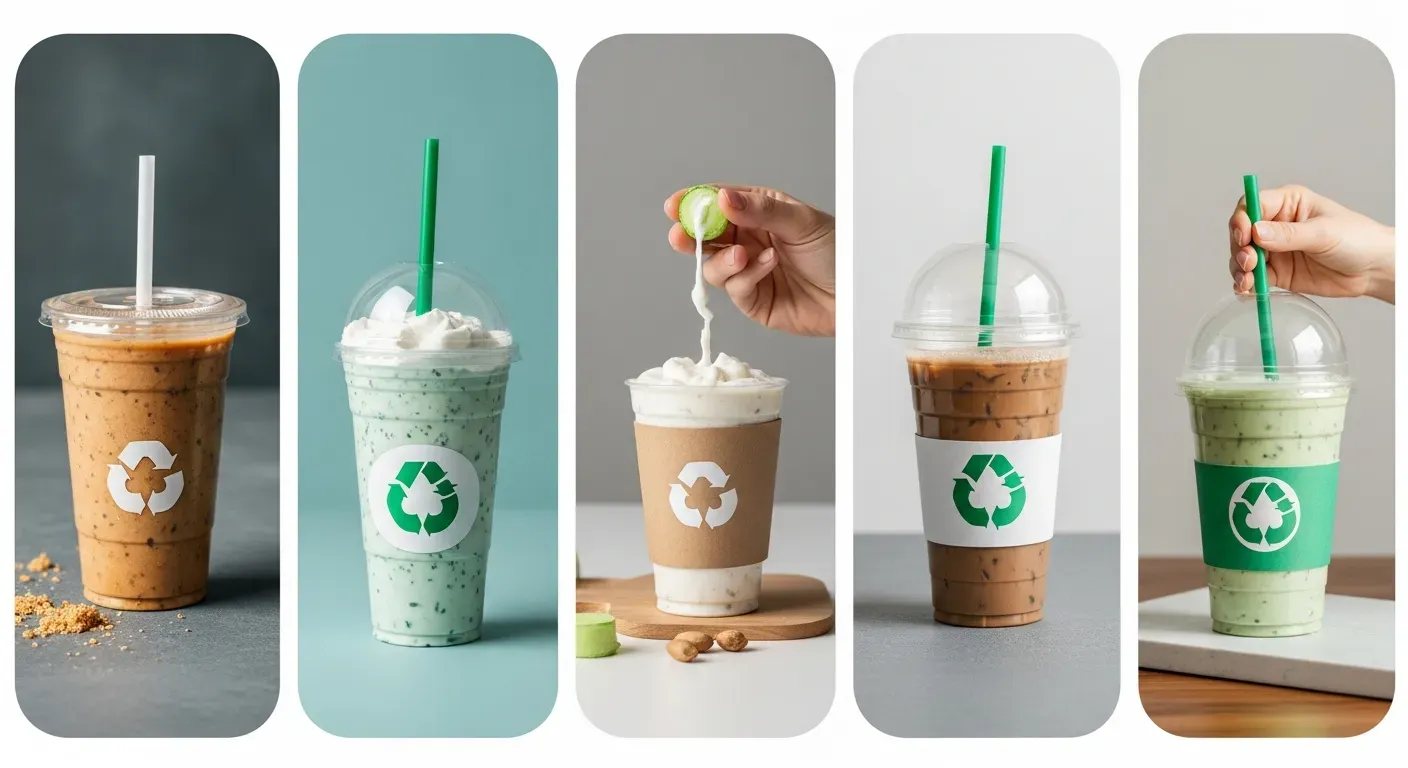
Material selection is a strategic component of innovative plastic cup design, not just a technical consideration. B2C consumers and B2B buyers now both consider environmental impact when making purchasing decisions.
There are several more sustainable material options for plastic cup materials. PLA (Polylactic Acid) is made from renewable resources such as corn or sugarcane and can break down under composting conditions. rPET (recycled PET) reduces the need for new raw materials and supports a circular economy. For regulatory reference on packaging material management, see the plastic waste management guidance from Indonesia’s Ministry of Environment and Forestry.
Integrating sustainable materials into innovative plastic cup design shows a measurable business commitment — not just following packaging design trends, but creating value that can be communicated to buyers and end customers.
A unique coffee cup made with more sustainable material is not only visually attractive; it also strengthens brand positioning among environmentally aware consumers — and this is increasingly becoming a deciding factor in corporate-scale procurement.
How Can Cup Design Strengthen Branding and Increase Selling Power?
Innovative plastic cup design is an often underestimated branding instrument. Every cup in circulation carries brand identity into customers’ hands — from the store to the office desk.
Key elements to consider:
- Strong Visual Identity: A clear logo and a design consistent with the brand palette build recognition across all touchpoints.
- Brand Narrative: A unique coffee cup can represent brand positioning — playful, elegant, or environmentally friendly. Design becomes an effective communication medium.
- Attractive Functionality: A design that is comfortable to hold improves consumer experience and reduces handling complaints.
- Material Innovation: Choosing sustainable plastic cup materials also becomes an additional selling point for buyers who pay attention to ESG.
By paying attention to current packaging design trends and maintaining consistency in innovative plastic cup design, your cup becomes an effective brand medium — not just a disposable container.
Inspirational Case Studies: Successful Plastic Cup Designs in the Market
Learning from real implementation gives more relevant context than theory alone. Here are examples of innovative plastic cup design with measurable impact:
Starbucks, one of the world’s largest coffee brands, runs a reusable cup program that encourages customers to bring their own cups. This program is not only a sustainability strategy but also strengthens its cup branding as a responsible brand. Starbucks seasonal cup designs consistently go organically viral on social media — showing the importance of packaging design trends that match the moment.
Meanwhile, many local coffee brands in Indonesia prove that unique coffee cups with minimalist designs or iconic illustrations can build strong customer loyalty even without large marketing budgets. A 2024 APCO study on Asian F&B brands showed that switching to cups with 1.2 mm wall thickness improved stack-height efficiency by 18% without a cost increase above 5% — an operational efficiency directly felt at large procurement scale.
See also how design innovation and technical specifications are discussed further in our plastic cup innovation article, as well as injection plastic cup products for custom B2B needs.
These case studies show that innovative cup design is not only about appearance — it is a business strategy that combines aesthetics, function, and sustainability at the same time.