
Design5 min read
Ergonomic Plastic Cup Design: The Secret to Outstanding Comfort
Discover the essentials of ergonomic plastic cup design and how grip comfort and visual aesthetics can work together.

The Secret of Ergonomic Plastic Cup Design: Comfortable in the Hand, Attractive to the Eye
Why Ergonomic Plastic Cup Design Is Key to User Comfort
Plastic cups with a grip diameter outside the 50–80 mm range cause hand fatigue when used for 4+ hours — a major issue for F&B staff working long shifts. This is where ergonomic plastic cup design plays a major role in business operations.
Design that ignores ergonomics creates a poor drinking experience: hands tire quickly, spill risk increases, and the consumption moment is interrupted. In contrast, ergonomic plastic cups designed to the right standard provide a stable grip without fatigue — for both hot coffee and cold beverages.
Several reasons make ergonomic design a quality benchmark:
- A stable plastic cup grip — not easy to slip or feel slick in the hand, even when the surface is wet from condensation.
- Balanced beverage weight distribution — reducing pressure on fingers and palm, especially for volumes above 300 ml.
- Accommodation for different hand sizes — a 75–90 mm diameter generally fits adult hands based on industry anthropometric standards.
- Adequate temperature insulation — double-wall structures can reduce heat transfer to the outer surface by 15–25°C compared with standard single-wall cups.
This is not only about physical comfort. Beverage product safety and comprehensive ergonomic plastic cup design are part of the quality standard expected by B2B buyers.
5 Important Principles for Creating Superior Ergonomic Plastic Cup Design
Here are five main principles for creating ergonomic plastic cup design that meets operational standards and end-user comfort:
- Natural and Secure Grip: The plastic cup grip should match hand contours. A grip diameter of 50–80 mm is the optimal range for one-handed holding without excessive fatigue.
- Optimal Weight Balance: Ergonomic plastic cups need to remain stable when filled. Good weight distribution prevents fatigue and reduces spill risk in crowded conditions.
- Safe and Functional Material: Choose food-grade, toxin-free safe plastic material that withstands the beverage temperature. Wingoh’s 5–6 gram food-grade PP cup standard is designed for balanced one-hand handling.
- Rim Comfort (Lip Design): The cup rim must be smooth and comfortable on the lips. This detail is often overlooked but has a significant impact on the consumption experience.
- Size Flexibility: The design should accommodate different user hand sizes. This is relevant for catering or fast-food operators serving a broad consumer segment.
What Is the Best Material for Safe, Durable Ergonomic Plastic Cups?
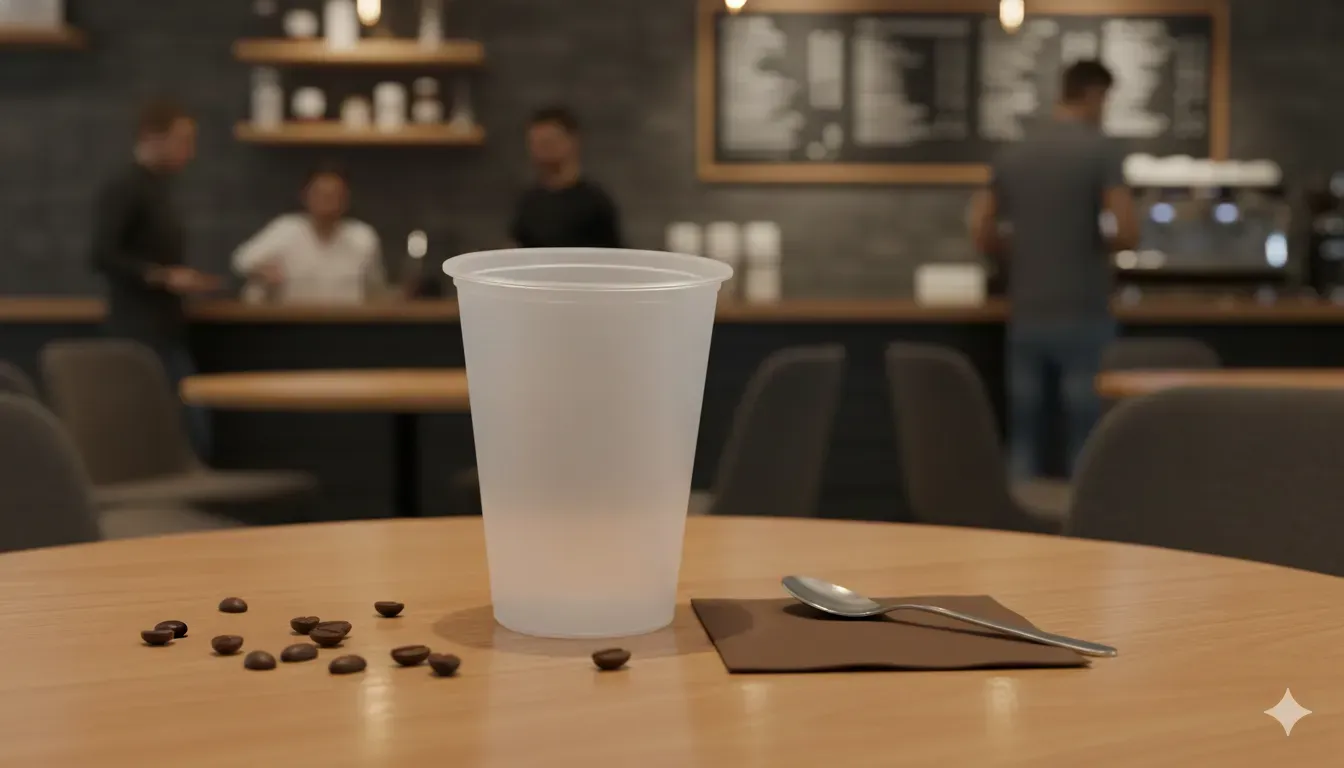
Material selection is a crucial variable in ergonomic plastic cup design — not only appearance, but tactile comfort, temperature resistance, and food safety. For safe and comfortable ergonomic plastic cups, two main materials are relevant:
- Polypropylene (PP): The preferred material for hot cups. PP has a matte surface with good natural grip, is flexible, and withstands heat up to 100°C. PP cups feel secure in the hand and support a stable plastic cup grip, even in mass production with a standard 0.7 mm wall thickness.
- Polyethylene Terephthalate (PET): Clear and lightweight, suitable for cold drinks. However, PET tends to become more slippery when wet from condensation, so PET cup design should compensate with added grip texture.
Make sure the safe plastic material is food-grade and complies with food-safety standards, as regulated by BPOM RI. Compliance is a basic prerequisite for corporate-scale F&B buyers. See also the complete guide to plastic cup material differences for deeper technical reference.
Case Studies of Innovative Ergonomic Plastic Cup Design
Real implementation provides more concrete context for design decisions. Here are references for successful ergonomic plastic cup design in the market:
Takeaway coffee cups with a narrowed contour in the middle are a proven solution. This design makes the plastic cup grip more secure because the fingers naturally wrap around the curve. Food-grade PP material supports good tactility even when the cup is filled with a hot beverage.
Similarly, ergonomic plastic cups for children’s yogurt products are shaped to be easy for small hands to hold, with thumb contours and a wide base for stability. The same design principles apply to F&B segments serving consumers of many ages.
Some innovative products combine ergonomic lids that are easy to open but still seal tightly — a detail that differentiates the delivery and takeaway experience. A 2024 APCO study showed that cups with added grip texture reduced spill incidents at delivery counters by up to 23%.
Learn more about plastic cup innovation and product specifications on Wingoh’s injection plastic cup page.
How to Implement Ergonomic Design in Mass Production
Implementing ergonomic plastic cup design into mass production requires close coordination between design, engineering, and procurement teams. Key steps include:
- Collaborate from the Start: Involve designers, production engineers, and procurement teams. Early alignment prevents expensive tooling revisions — injection mold tooling typically costs USD 3,000–15,000 depending on design complexity.
- Run Intensive Prototype Testing: Produce samples and collect operational feedback. Confirm the comfortable plastic cup feels right in hand and the plastic cup grip meets the standard before mass production.
- Choose Materials Carefully: PP vs. PET and 0.7 mm vs. 1.2 mm wall thickness affect cost, function, and tactile quality at the same time.
- Adapt Design to the Machine: Ensure the cup taper angle, generally 5–8 degrees, allows clean mold ejection and efficient stacking.
- Consider Scalability: The design must maintain ergonomic tolerances and beverage product safety even when produced in millions of units per year.
With careful planning, ergonomic plastic cups that are attractive and production-efficient can be achieved without a quality trade-off.
The Future of Plastic Cup Design: Ergonomic Innovation and Environmental Sustainability
The future of ergonomic plastic cup design is moving in two directions at once: better user comfort and more sustainable materials. These are not trade-offs — current innovation proves both can be achieved together.
Going forward, manufacturers will adopt fully recyclable materials, including food-grade mono-material PP that enters recycling streams more easily than multilayer cups with mixed coatings. Renewable alternatives such as corn starch or bamboo fiber are also entering premium segments.
On the design side, the circular economy concept will push every cup element to be designed for easy separation, recycling, and residual value. This includes innovation in the plastic cup grip so it does not interfere with recycling and every component can be reused.
This approach is promoted by organizations such as the Ellen MacArthur Foundation as a future industry standard for consumer packaging.
The future of plastic cups is a combination of continuously optimized ergonomics, production efficiency, and environmental responsibility — ensuring beverage product safety and packaging supply-chain sustainability.