
Materials6 min read
PP Plastic for Cups: The Secret Behind Better Cup Quality
Why can cup quality differ so much? Learn what PP plastic resin is, how it affects cup performance, and what buyers should verify before choosing a supplier.
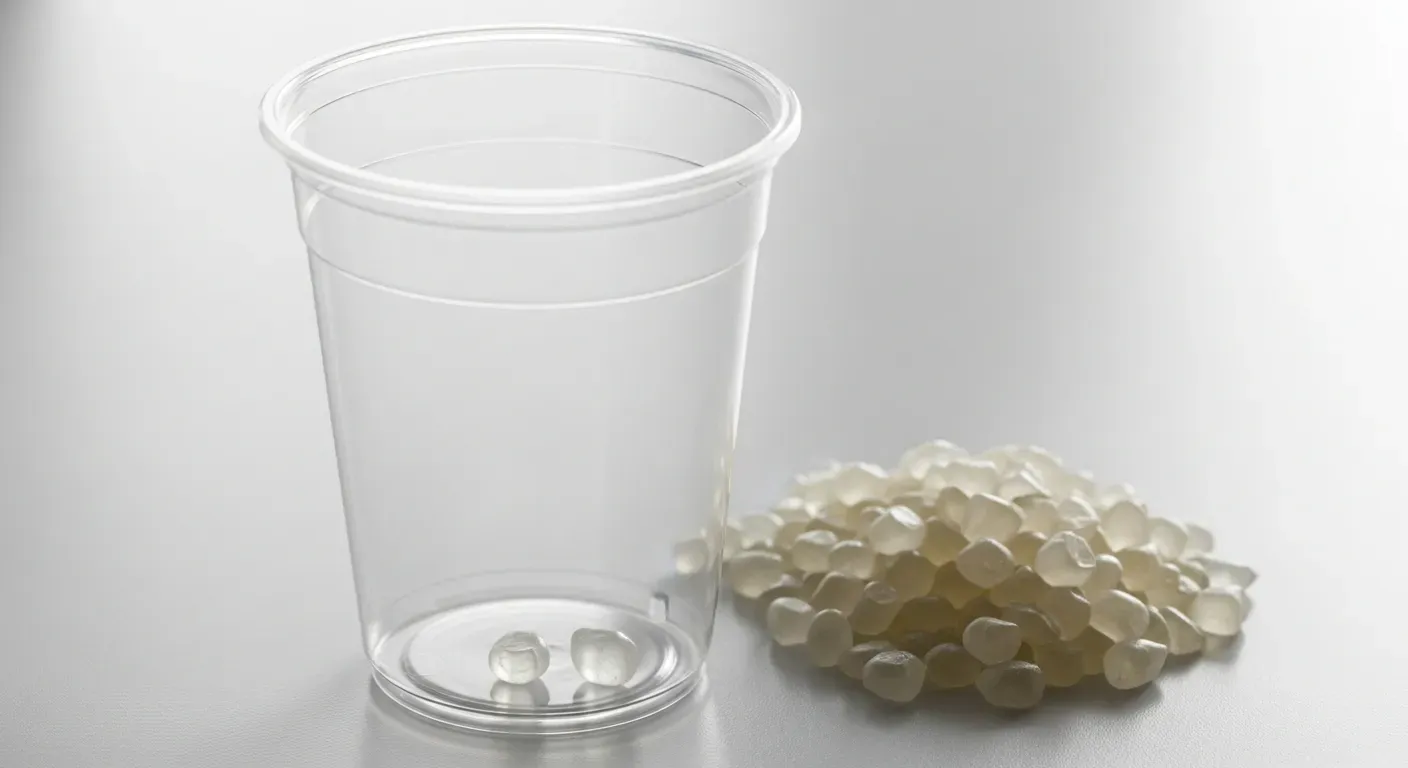
Understanding the Main Raw Material: What Is PP Plastic Resin and How Does It Affect Your Cup Quality?
Complete Guide: Revealing the Role of PP Plastic in Your Cups
Polypropylene (PP), resin code #5, is the material that keeps drink cups sturdy, light, and heat-resistant up to 100–120°C — a specification PET or PS cannot meet. It is the backbone of the global F&B packaging industry because it combines strong thermal properties with competitive pricing.
PP stands for polypropylene, one of the most popular and versatile plastic cup materials. PP density is only 0.905 g/cm³ — lighter than PET at 1.38 g/cm³ — which directly improves logistics cost efficiency per shipping carton.
From heat resistance and chemical stability to recyclability, PP plastic for cups is a technically measurable choice. Beverage business operators and procurement managers should understand these specifications before selecting a vendor.
7 Main Advantages of PP Plastic for Food and Beverage Packaging
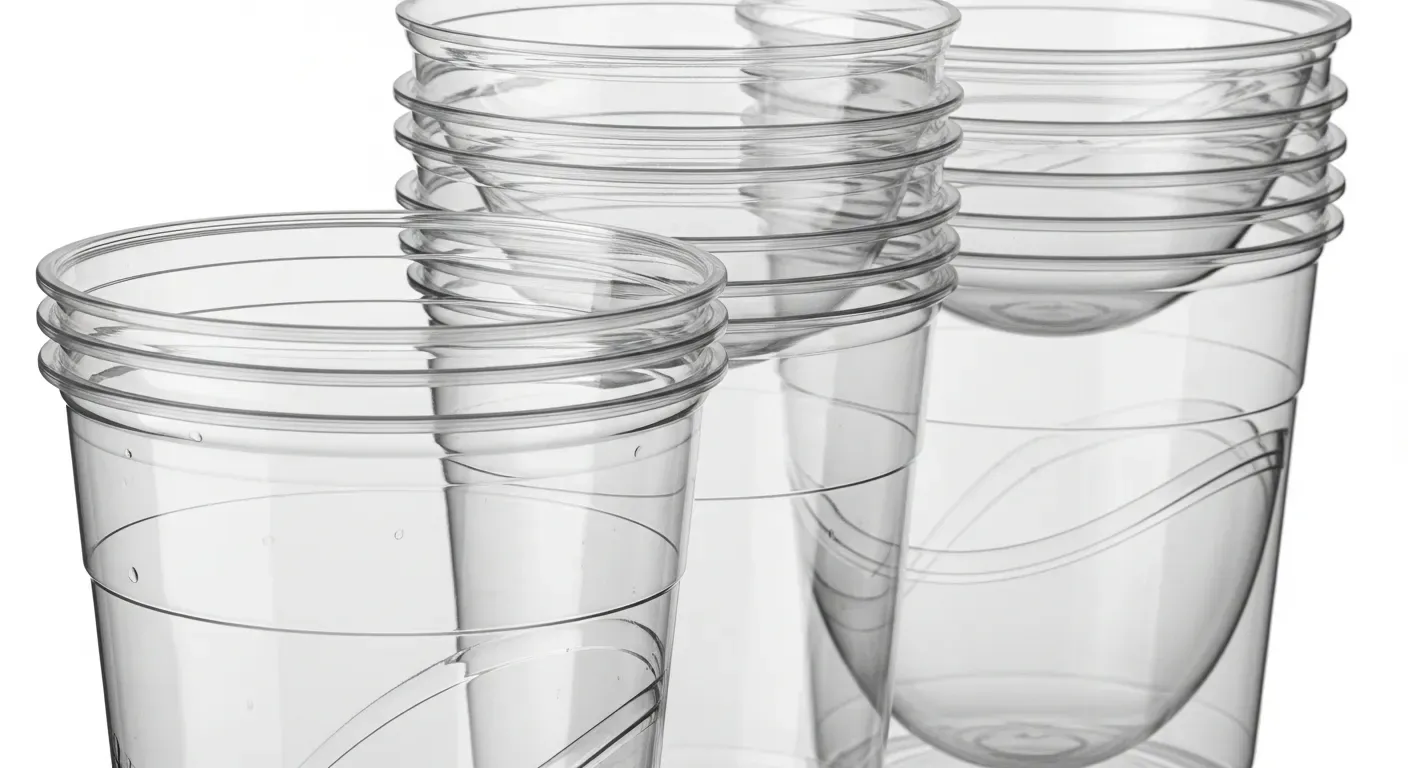
Polypropylene plastic has seven core advantages over other beverage packaging materials:
- High Heat Resistance: PP withstands 100–120°C, making it ideal for hot drinks. PP plastic for cups does not melt or deform at normal coffee and tea operating temperatures.
- Lightweight and Strong: Density of 0.905 g/cm³ makes PP cups sturdy while keeping shipping costs efficient. They do not dent easily in the hand.
- Safe and Food Grade: Food-grade PP meets FDA 21 CFR 177.1520 and FSSC 22000 standards for direct food contact. For more scientific detail on polypropylene properties, see this ScienceDirect polypropylene reference.
- Clear and Attractive: The product inside the cup remains visible, supporting drink presentation.
- Flexible and Easy to Print: PP accepts offset and UV screen printing with sharp results — suitable for branded cups.
- Economical: PP plastic pricing remains competitive at scale, with lower unit cost than PET in high-volume production.
- Recyclable: PP code #5 can enter recycling streams, especially single-material cups without multi-layer coating.
Why PP Plastic Outperforms Other Materials for Cup Production
Several other plastic cup materials are available — PET (Polyethylene Terephthalate), PS (Polystyrene), and even paper cups. The direct comparison is clear.
Compared with PET, polypropylene plastic is far better for heat resistance. PET tends to soften at 70°C and above, making it unsuitable for hot coffee or tea. PP handles 100–120°C without deformation.
Paper cups may be perceived as more environmentally friendly, but they soften after long heat exposure, can leak, and are less rigid for extended use. The advantages of PP plastic avoid these issues.
PS is more brittle and less flexible than PP, while PP packaging resists impact better during distribution. On unit cost, PP plastic price is very competitive for large production volumes. PP recyclability (code #5) also gives it an advantage in long-term sustainability.
For a deeper comparison of PP vs PET vs PS, read the plastic cup material comparison.
What Are PP Plastic Applications Beyond Drink Cups?
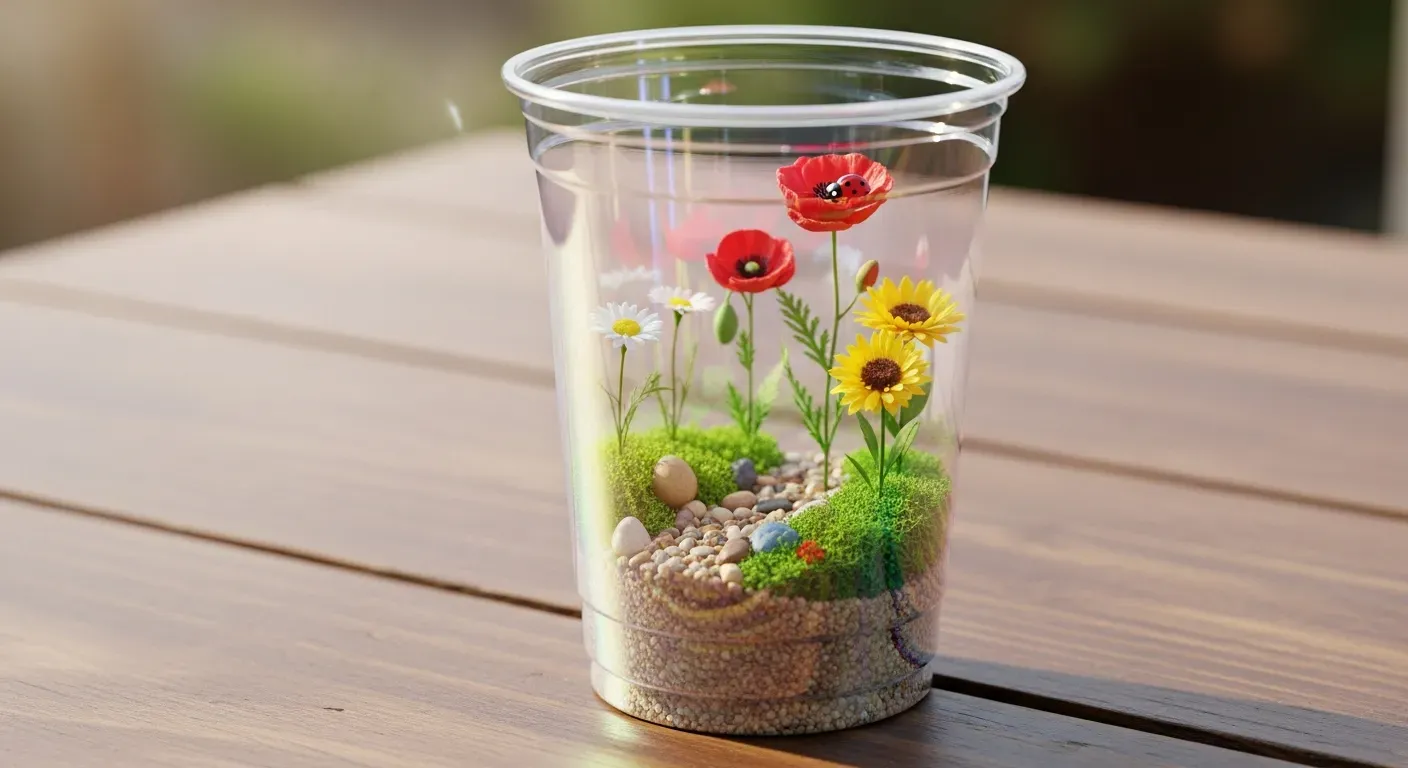
The use of polypropylene plastic goes far beyond drink containers. Because of its thermal, chemical, and mechanical properties, PP is selected across many industries.
Ready-to-eat food packaging such as lunch boxes, yogurt containers, and bottled-water caps commonly use PP. In households, many kitchen tools and food storage containers also use PP as the base material.
Its flexibility and durability make it suitable for more technical applications: automotive components, children’s toys, and medical equipment. It is a genuinely versatile material.
For cup applications, the key buyer question is food-contact safety. The answer lies in certification: food-grade PP cups meet FSSC 22000 and ISO 9001 standards — two certifications required by major F&B chains and export buyers entering Australia. Wingoh has operated with both as a food packaging producer since 1992.
The international overall migration limit is 10 mg/dm². Wingoh PP cups pass this testing with Certificate of Analysis (CoA) documentation per production batch.
Environmental factors also matter. Polypropylene plastic is recyclable; collectors in Jakarta and Tangerang already accept PP. Make sure PP plastic cups are sorted and collected so they can enter recycling streams properly.
Practical Guide to Choosing PP Cups and the Future of Sustainable PP Innovation
After understanding PP specifications, use this practical guide to choose the right PP plastic cup:
First, verify food-grade certification. This is mandatory for food-contact safety. FSSC 22000 certification is a standard buyers should request from suppliers. Also consider cup thickness for the application: thinwall 0.4–1.2 mm for standard disposable cups.
Compare PP plastic prices across suppliers, but do not focus only on the lowest quote. Resin quality, batch consistency, and manufacturer reputation determine whether you get the full technical advantages of PP plastic.
The future of PP for cup applications is promising. Innovation continues to make PP more environmentally responsible, including development of recycled PP cups and formulations that break down more easily under specific conditions.
For complete size and specification catalogs, visit Wingoh’s injection plastic cup product page.
Myths and Facts About PP Plastic
Here are common misconceptions about PP plastic for cups and the facts behind them:
Myth 1: All plastics are dangerous. Fact: Food-grade polypropylene plastic is safe for food and beverages. Strict international standards such as FDA 21 CFR 177.1520 and FSSC 22000 ensure food-contact safety.
Myth 2: PP plastic cannot be recycled. Fact: PP is a widely recycled plastic cup material globally and carries code #5. Proper sorting is important so PP recycling can run efficiently.
Myth 3: PP plastic is expensive. Fact: Considering durability and service life, the investment is worthwhile. PP plastic pricing is competitive at high production volumes, especially compared with replacement cost from deformation or quality complaints.
Understanding these facts helps procurement teams make more accurate, data-based decisions.
Tips for Choosing Quality PP Plastic Cups
After learning the specifications of PP plastic for cups, use this checklist to select quality PP cups:
First, make sure there is a food-grade label or documentation — look for the fork-and-glass symbol or FSSC 22000 certificate. This indicates the polypropylene plastic cup is safe for food and beverages.
Second, check cup thickness and strength. Cups that are too thin (below 0.4 mm for thinwall standard) usually dent easily. Choose a plastic cup type that feels sturdy in hand — this proves the reliable advantages of PP plastic in production.
Third, if sustainability matters, prioritize single-material design without additional layers. Single-material PP cups, like those produced by Wingoh, are easier to recycle than multi-layer coated cups.
Finally, compare PP plastic price against the quality offered. Do not fixate on the lowest price; resin quality and production consistency determine cup performance in real operations.
For cross-reference, also read plastic cup materials, which compares PET, PP, and PS from a beverage business decision perspective.
More Than Packaging: Our Role in Managing PP Plastic
After understanding PP plastic for cups, remember that the buyer’s role does not stop at material selection. As a business operator, you also carry responsibility in the end-of-life packaging chain.
Every PP cup used, especially single-use cups, must be managed properly to ensure PP recycling works effectively without polluting the environment.
Steps businesses can apply:
- Separate packaging waste: Instruct employees not to mix used cups with organic waste.
- Clean residue: Rinse remaining drinks or food before disposal. This increases PP residue value for collectors.
- Find recycling facilities: Sort and send to collectors that accept PP code #5 in your operating area.
With these steps, your business contributes positively to material circularity and supports the sustainability of PP plastic for cups, proven for more than 30 years in Indonesia’s packaging industry.