
Materials7 min read
Plastic Cup Materials: Complete Guide to Types & Functions
Understand plastic cup types and functions by material. Find the right plastic cup material with this practical, informative selection guide.
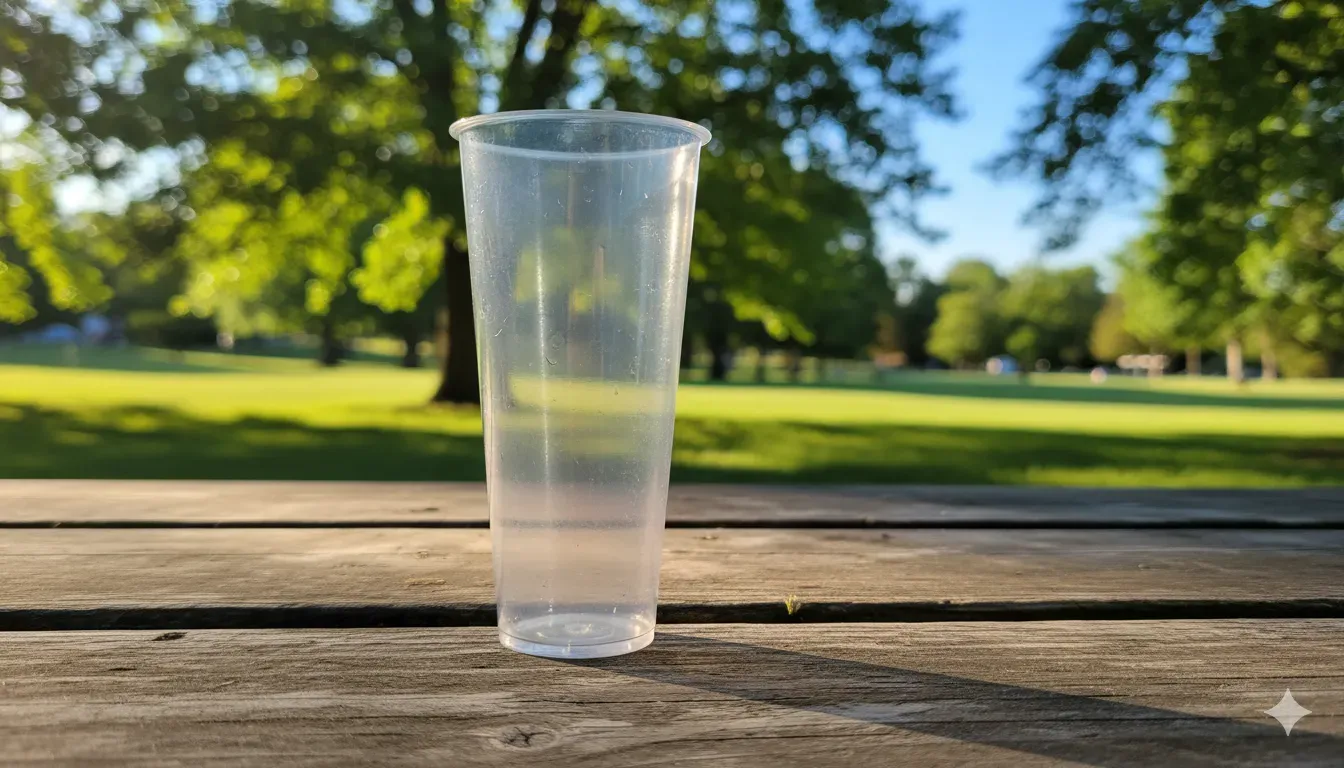
Types and Functions of Plastic Cups by Material
A Closer Look at Popular Plastic Cup Materials
The plastic cup material determines three things at once: migration safety into the drink, temperature resistance (PP withstands 100-120°C while PET is limited to around 70°C), and production cost per unit. Understanding these differences is crucial for B2B buyers and beverage business operators.
The following are the three materials most commonly used to make plastic cups in the market.
- PET (Polyethylene Terephthalate) — PET plastic cups are known for crystal-clear transparency, making them the main choice for cold drinks such as mineral water, juice, or iced coffee. The material is rigid, lightweight, and has good gas-barrier properties. Resin code #1.
- PP (Polypropylene) — PP plastic cups have a transparent or semi-opaque appearance. Their main advantage is resistance to high temperatures up to 100-120°C, making them suitable for microwave use. For hot drinks such as tea or coffee, PP is the safe choice. Resin code #5, density 0.905 g/cm³.
- PS (Polystyrene) — This material is often found as styrofoam cups or clearer but more brittle and lightweight plastic types for cups. It is generally used for soft drinks or economical disposable drink containers, although its use is increasingly restricted in several regions. Resin code #6.
Understanding the differences between each type of plastic for drink containers helps not only with function, but also with ensuring plastic cup safety when in contact with food or beverages. Choosing the right packaging material can be key to your business success.
What Is the Food-Grade Standard and Why Does It Matter for Plastic Cups?
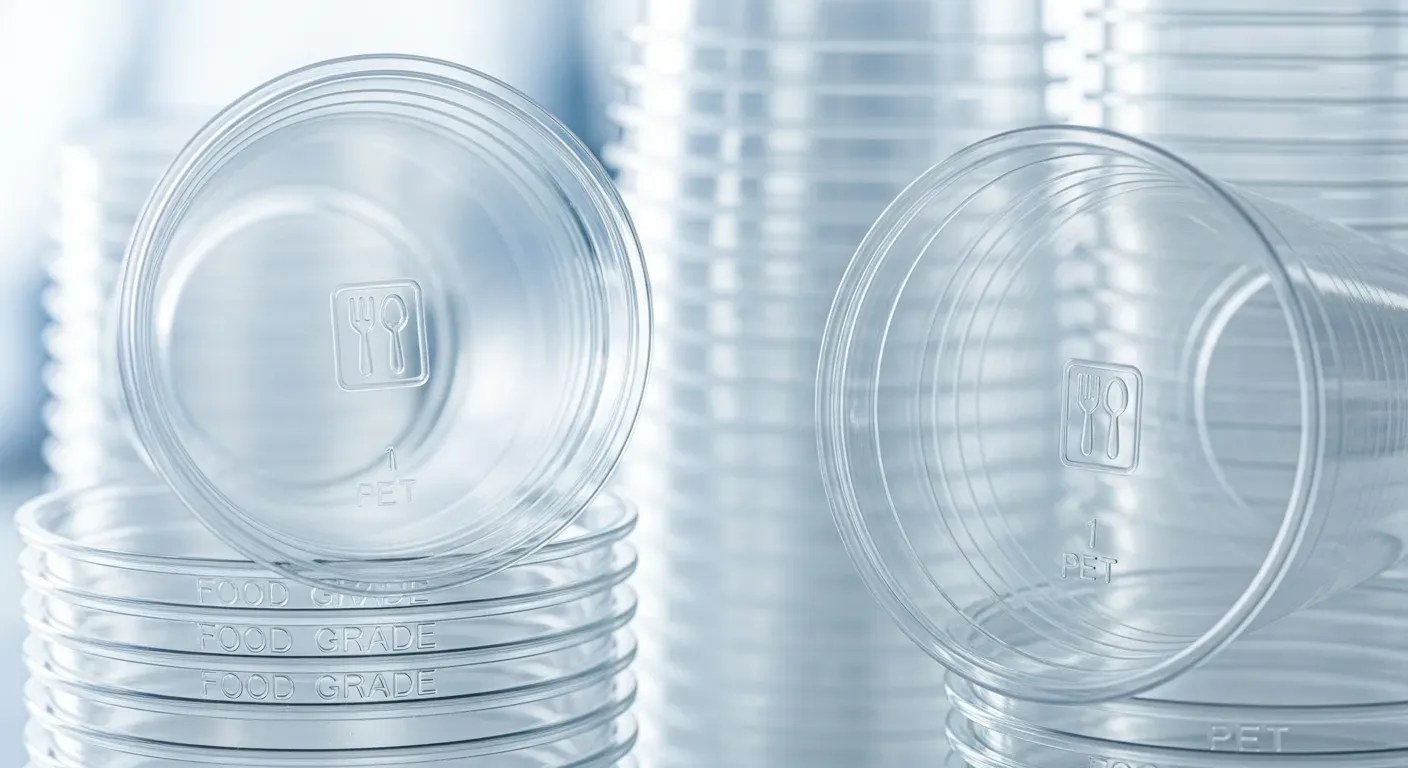
After learning about different plastic cup materials, one thing must not be ignored: the Food Grade standard. This label guarantees that a material, including any plastic type for cups, is safe for direct contact with food or beverages and will not release harmful substances into the product consumed.
At the international regulatory level, three major standards apply to food packaging: FDA 21 CFR 177.1520 (United States), EFSA Regulation 10/2011 (Europe), and FSANZ Standard 1.4.3 (Australia/NZ). The overall migration limit is set at no more than 10 mg/dm² of contact surface, meaning substances that move from plastic into food must remain below that threshold.
In Indonesia, the Food and Drug Authority (BPOM) sets standards and supervises food-packaging safety. Manufacturers of plastic cup materials must pass a series of strict tests to obtain Food Grade certification. Wingoh also holds FSSC 22000 — a global food-safety management-system standard that is often required for supplier approval by large F&B chains and for exports to Australia.
Important aspects of Food Grade standards include:
- Free from hazardous substances: The materials used do not contain toxic chemicals that can migrate into food or beverages.
- Does not alter quality: The plastic does not change the taste, smell, or other quality attributes of its contents.
- Material stability: The material can withstand specific use conditions, such as high temperatures for PP plastic cups or low temperatures for PET plastic cups, without melting or breaking down.
Choosing drink containers with a Food Grade label is a wise step to protect consumer health. Always check for this label, especially if you operate a beverage business.
Crucial Comparison: PET vs PP and Heat-Resistance Capacity
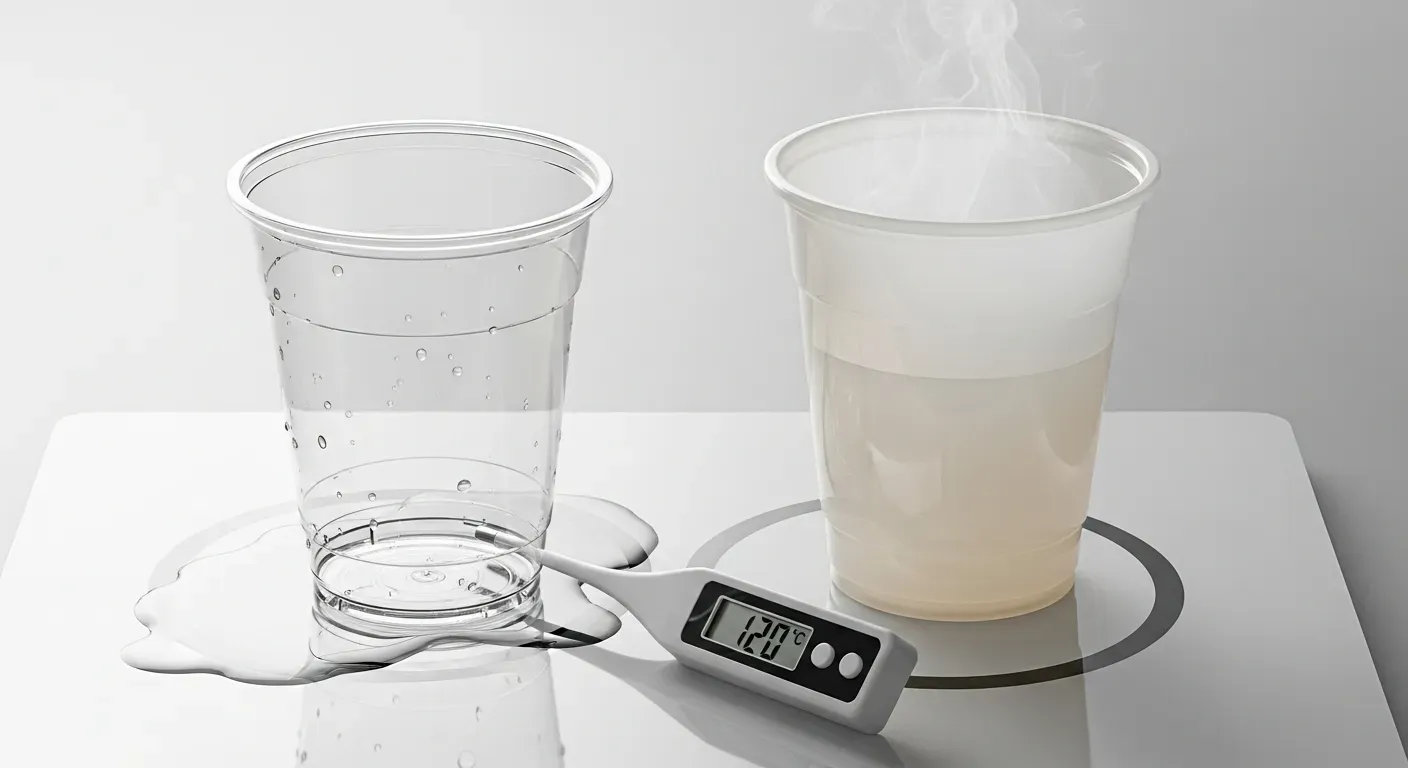
The two dominant materials in plastic cup materials are PET and PP. They have very different characteristics, especially in heat resistance.
PET plastic cups (Polyethylene Terephthalate) are clear, transparent, and lightweight. They are often used for cold drinks such as iced coffee, juice, or boba drinks. Their strength is clarity and the ability to display the drink attractively. However, PET has a significant limitation at high temperatures — its tolerance is only around 60-70°C. PET is not the right choice for freshly brewed hot drinks.
PP plastic cups (Polypropylene) are more flexible, semi-transparent, and much more heat-resistant. PP heat resistance reaches 100-120°C, making it ideal for hot drinks such as tea, coffee, or even warm porridge. PP density at 0.905 g/cm³ is lighter than PET (1.38 g/cm³), which also affects logistics cost efficiency per carton.
For industrial-scale sourcing of injection-molded plastic cups, the quick guide is:
- Cold drinks where a clear display matters — choose PET plastic cups (code #1).
- Hot or warm drinks — PP plastic cups (code #5) are non-negotiable for plastic cup safety and customer comfort.
Understanding this difference is very important, especially if you use disposable plastic cups in business operations.
How Do You Choose the Right Plastic Cup Material for a Beverage Business?
Choosing the right container directly affects brand image, customer satisfaction, and operational efficiency. The wrong choice can lead to poor product quality and customer complaints.
First, determine the type of beverage you sell — cold, warm, or hot. This is the main factor in material selection.
For cold drinks such as iced coffee, boba, or juice, PET plastic cups are the best choice. PET clarity makes drinks look attractive and premium, increasing perceived product value.
For hot beverage menus such as coffee or warm tea, PP plastic cups must be used. PP withstands heat up to 120°C, so hot drinks remain safe without deformation risk. This material choice also keeps consumers comfortable when holding the PP cup.
Other factors to consider include branding, minimum order quantity, and per-unit budget. Match the choice to your business needs, and prioritize product quality and safety.
For further reference on plastic cup material differences and comparative PP vs PET guidance, see the full guides in our material article section.
A Wise Step: Environmental Impact and Eco-Friendly Alternatives
The convenience of disposable plastic cups is significant, but environmental impact must be considered in long-term procurement.
Most plastic cup materials such as PET and PP take hundreds of years to decompose. Every drink container that is not properly managed accumulates in landfills and can pollute soil, water, and ecosystems.
Alternatives to consider include:
- Compostable cups: Made from plant-based materials such as PLA (polylactic acid) or sugarcane fiber. They can decompose naturally in industrial composting facilities.
- PLA-lined paper cups: Shaped like regular paper cups, but with a PLA inner layer that can break down more readily — better for the environment than conventional PE lining.
- Reusable cups: Drink containers that can be washed and used repeatedly. This is the most effective way to reduce packaging waste.
As a business owner, choosing more environmentally friendly plastic cup materials can add value in consumers' eyes and support long-term sustainability initiatives.
5 Important Facts About Recycling and Plastic Cup Material Innovation
Here are five important facts about plastic cup materials and their recycling cycle that B2B buyers should understand:
- Recycling requires proper material sorting. Many assume all plastics can be recycled together. In reality, disposable plastic cups are made from different materials and must be sorted. PP plastic cups (code #5) and PET plastic cups (code #1) are recycled separately.
- Know the Resin Identification Code (RIC) on the packaging base. The triangle symbol with a number is the Resin Identification Code: #1 = PET/PETE, #2 = HDPE, #3 = PVC, #4 = LDPE, #5 = PP, #6 = PS, #7 = Others. This code helps recycling facilities identify which plastic type for cups can be processed.
- Bioplastic innovation continues to develop. Beyond PLA, many studies are developing bioplastics from other renewable sources so future plastic cup materials can decompose more quickly.
- Buyers play a crucial role in the recycling chain. Without proper upstream sorting, recycling will not be maximized. Make sure remaining drinks are cleaned out before containers go into recycling bins.
- The circular economy is becoming the new standard. This is more than ordinary recycling — products are designed to be reused, repaired, and then recycled as fully as possible. Single-material PP plastic for cups without multi-layer coating is easier to enter this circular stream than multi-layer packaging.
For a complete guide to resin codes and choosing the right material, also read types of plastic for F&B businesses.