
Business5 min read
Eco-Friendly Plastic Cup Business Outlook: A Profitable Opportunity
Curious about the outlook for eco-friendly plastic cup businesses in Indonesia? This article explains the profit potential amid rising environmental pressure.
A Bright Outlook? In-Depth Analysis of Eco-Friendly Plastic Cup Businesses Amid Indonesia’s Environmental Issues
Why Sustainable Plastic Packaging Is a Profitable Future Investment
Production costs for bioplastics such as PLA are currently 30–50% higher than conventional PP. Even so, urban Gen Z and Millennial consumers in Indonesia already show willingness to pay a 10–25% premium for products with transparent and credible environmental impact. A narrowing price gap, stronger regulation, and export market demand for sustainability make this segment worth serious consideration.
Public awareness of the impact of conventional plastic cups has increased significantly. Consumers actively look for eco-friendly packaging alternatives. Demand for plastic cups that reduce environmental harm continues to grow, creating a real market gap in F&B and export markets.
In addition, stricter government regulation on single-use plastic directly supports this segment’s growth. Indonesia’s Ministry of Environment and Forestry has issued various policies to reduce plastic waste. For manufacturers that already prepare sustainable products, these regulations become a barrier for competitors — not a burden.
Understanding Sustainable Packaging Opportunities in a New Era: 7 Key Points
Seven points determine success in eco-friendly plastic packaging:
- Consumer Demand Is Rising: Consumers are increasingly environmentally aware and seek more responsible packaging, including better plastic cups.
- Government Regulation Supports the Shift: Stricter rules on single-use plastic push the transition to eco-friendly alternatives, turning preference into necessity.
- Sustainable Material Innovation: Bioplastic technology continues to improve, although industrial composting infrastructure in Indonesia is still uneven for full PLA degradation.
- Green Lifestyle Becomes a Priority: The “go green” trend creates large business opportunities in F&B and events, especially in major cities.
- Export Market Potential: Under AANZFTA, HS 3924.10 products (plastic tableware including cups) receive zero import duty into Australia and New Zealand — markets with strict sustainability expectations.
- Positive Brand Image: Businesses using sustainable packaging gain better reputation and stronger customer loyalty, especially in modern trade and large horeca segments.
- Economical Middle Path: Food-grade mono-material PP cups are practical: easier to recycle than multi-layer cups, with production costs not far from conventional PP.
What Raw Materials Suit Eco-Friendly Plastic Cups?
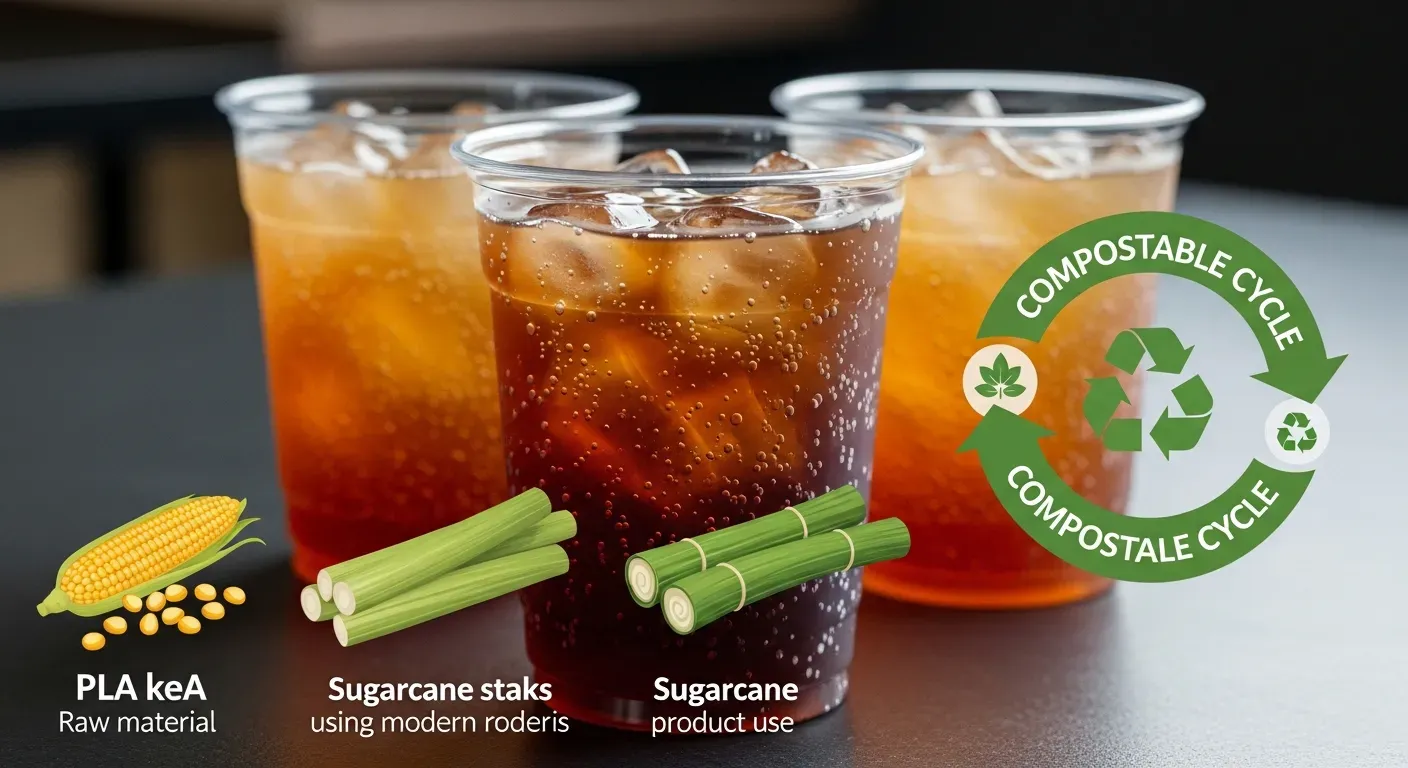
Material choice determines price position, target market, and the sustainability claims a business can make. The main options are:
- PLA (Polylactic Acid): Made from corn or sugarcane starch, these plastic cups are compostable in industrial composting facilities. Cost is 30–50% higher than conventional PP. Best for premium segments and export markets requiring sustainability.
- Sugarcane Bagasse: A by-product of sugar production; strong, heat-resistant, and fully degradable. A good alternative to conventional plastic cups for horeca.
- Bio-Coated Paper: Paper-based cups coated with PLA or biowax for water resistance. Recyclable in some facilities and popular in premium café segments.
- Food-Grade Mono-Material PP: Not biodegradable, but easier to enter PP (#5) recycling systems that are more widely available in Indonesia. This is the most economical middle path while still supporting a more responsible packaging claim.
For a more complete technical comparison, read the plastic cup material guide and the 2026 plastic cup industry trends.
Effective Marketing Strategies for Sustainable Plastic Packaging Businesses
Having a quality eco-friendly plastic cup product is one thing. Convincing business buyers requires more than an “eco-friendly” claim.
Transparency is the foundation of B2B buyer trust. The following strategies have proven effective:
- Explain Business Value, Not Only Environmental Value: Show that sustainable packaging helps clients enter modern trade channels, meet export importer requirements, or strengthen brand positioning to end consumers.
- Full Transparency: Provide concrete data — recycled content percentage, certifications held (FSSC 22000, SNI), and how the product degrades or is recycled. Premium buyers do not trust claims without evidence.
- Educate Buyers: Provide guidance on how to dispose of or recycle the product. This builds loyalty and reduces after-sales questions.
- Use Green Communities and Certifications: Display environmental certifications clearly. In export markets, certification is an entry requirement, not just added value.
How to Address Regulatory Challenges in Eco-Friendly Plastic Cups
Higher raw material costs and low market education are the two main barriers in this segment. The solution requires a practical strategy.
On cost, the most efficient middle path is food-grade mono-material PP cups. They are not 30–50% more expensive like bioplastics, but can still be positioned as responsible packaging because they are easier to recycle. This opens a wider segment beyond premium clients only.
On regulation, compliance with plastic regulation is not a burden — it is a long-term investment. Manufacturers that already meet regulatory standards are more resilient when rules tighten and can enter export markets with strict compliance requirements more easily. Keep monitoring KLHK and local government regulation because city and district policies may differ.
Building a compliance track record early also strengthens negotiation with large buyers and national horeca accounts.
Analyzing Profit and Starting a Sustainable Plastic Packaging Business
APCO Australia’s 2024 study shows that brands switching to 30% recycled content saw a 5–10% margin decline in the first year, but recovered within 18 months through premium positioning. Similar patterns appear in Southeast Asian F&B: brands with clear packaging certification enter modern trade and large horeca channels more easily.
Modern consumers are willing to pay a 10–25% premium for products with transparent environmental impact. This margin offsets higher production costs, especially when targeting premium cafés, green-themed event organizers, or export buyers.
Structured first steps to build this business opportunity include:
- Market Research: Understand target business buyers and their specific sustainable packaging needs — brand claims, export requirements, or regulatory compliance.
- Choose Raw Materials: Decide price positioning first, then match the material. Mono-material PP for volume segments; PLA or bagasse for premium segments.
- Handle Permits and Certifications: FSSC 22000 and SNI are foundations of buyer trust. Comply with relevant regulations from the beginning.
- Develop Prototypes: Design plastic cups that meet technical specifications and remain visually appealing.
- Build a B2B Marketing Plan: Focus on concrete business value, not only environmental narrative. Also see the plastic cup industry growth trends for broader market context.
For sustainable product options already available from an Indonesian manufacturer, see Wingoh’s injection plastic cup product page.